Quotessence
Home / Quotes / Quote by Mitch Albom

Quote by Mitch Albom

Work

Tuesdays With Morrie: An old man, a young man, and life's greatest lesson

This memoir explores the deepening bond between Morrie Schwartz, a beloved college professor, and Mitch Albom, his former student, as they meet weekly to discuss life, love, and mortality. The story delves into the wisdom and insights Morrie imparts, offering a moving reflection on the human experience and the importance of living fully. more

Author
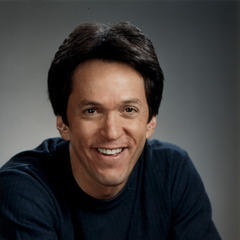
Mitch Albom
Mitch Albom

Mitch Albom, born on May 23, 1958, is a renowned American author known for his profound exploration of themes such as life, faith, and love. His works, including 'Tuesdays with Morrie' and 'For One More Day', are celebrated for their emotional depth and rich character development. more

You May Also Like

“Men were, after all, not wholly inconsequent; their attachment to Mary rested on an instinct of self-preservation. They knew their own peril. If there was to be a future life, Mary was their only hope. She alone represented Love. The Trinity were, or was, One, and could, by the nature of its essence, administer justice alone. Only childlike illusion could expect a personal favour from Christ. Turn the dogma as one would, to this it must logically come. Call the three Godheads by what names one liked, still they must remain One; must administer one justice; must admit only one law. In that law, no human weakness or error could exist; by its essence it was infinite, eternal, immutable. There was no crack and no cranny in the system, through which human frailty could hope for escape. One was forced from corner to corner by a remorseless logic until one fell helpless at Mary's feet. Without Mary, man had no hope except in atheism, and for atheism the world was not ready. Hemmed back on that side, men rushed like sheep to escape the butcher, and were driven to Mary; only too happy in finding protection and hope in a being who could understand the language they talked, and the excuses they had to offer.”

“Henry Adams, the reluctant tourist of 1860, pondering the forty-foot dynamos in the Great Exposition of 1900 in Paris, sensed with alarm their 'moral force, much as the early Christians felt the Cross.' He saw 'only an absolute fiat in electricity as in faith.' Physics was occupied with a 'supersensual world' of 'chance collisions' - physics was 'stark mad in metaphysics.' The pragmatic and human-scaled thinking that had sustained the fond narratives of nineteenth-century historians seemed feckless, disoriented.”