Quotessence
Home / Quotes / Quote by Jon Meacham

Quote by Jon Meacham

“The creed of which Myrdal and Schlesinger and others have long spoken can find concrete expression only once individuals in the arena choose to side with the angels. That is a decision that must come from the soul—and sometimes the soul’s darker forces win out over its nobler ones. The message of Martin Luther King, Jr.—that we should be judged on the content of our character, not on the color of our skin—dwells in the American soul; so does the menace of the Ku Klux Klan. History hangs precariously in the balance between such extremes. Our fate is contingent upon which element—that of hope or that of fear—emerges triumphant.”

Quote by Jon Meacham

Work

The Soul of America: The Battle for Our Better Angels

Browse quotes and source details for this work. more

Author
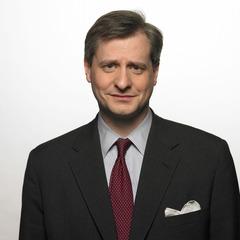
Jon Meacham
Jon Meacham

Jon Meacham is an American editor and author known for his in-depth analysis of history and public affairs. Born on May 20, 1969, he graduated from Yale University and earned a master's degree from Georgetown University. Meacham served as the executive editor of Newsweek, where he published numerous articles on politics, culture, and history. His writings cover significant figures and events in American history and are well-received by readers. more

You May Also Like

“What is the American soul? The dominant feature of that soul—the air we breathe, or, to shift the metaphor, the controlling vision—is a belief in the proposition, as Jefferson put in the Declaration, that all men are created equal. It is therefore incumbent on us, from generation to generation, to create a sphere in which we can live, live freely, and pursue happiness to the best of our abilities. We cannot guarantee equal outcomes, but we must do all we can to ensure equal opportunity.”

“I know of no soil better adapted to the growth of reform than American soil,” [Frederick] Douglass said after the Supreme Court’s Dred Scott decision in 1857. “I know of no country where the conditions for affecting great changes in the settled order of things, for the development of right ideas of liberty and humanity, are more favorable than here in these United States.”

“Harry Truman—the man who won the four-way 1948 presidential campaign, triumphing over the segregationist Thurmond, the Progressive candidate Henry A. Wallace, and the Republican Thomas E. Dewey—once said: “You can’t divide the country up into sections and have one rule for one section and one rule for another, and you can’t encourage people’s prejudices. You have to appeal to people’s best instincts, not their worst ones. You may win an election or so by doing the other, but it does a lot of harm to the country.”

“Harry Truman—the man who won the four-way 1948 presidential campaign, triumphing over the segregationist Thurmond, the Progressive candidate Henry A. Wallace, and the Republican Thomas E. Dewey—once said: “You can’t divide the country up into sections and have one rule for one section and one rule for another, and you can’t encourage people’s prejudices. You have to appeal to people’s best instincts, not their worst ones. You may win an election or so by doing the other, but it does a lot of harm to the country.” Truman understood something his legendary immediate predecessor had also grasped: that, as Franklin D. Roosevelt observed during the 1932 campaign, “The Presidency is not merely an administrative office. That’s the least of it. It is more than an engineering job, efficient or inefficient. It is pre-eminently a place of moral leadership.”

“There was nothing, Lyndon Johnson remarked, that “makes a man come to grips more directly with his conscience than the Presidency. Sitting in that chair involves making decisions that draw out a man’s fundamental commitments. The burden of his responsibility literally opens up his soul. No longer can he accept matters as given; no longer can he write off hopes and needs as impossible.” The office was a crucible of character.”

“His person, countenance, character, and actions, are made the daily contemplation and conversation of the whole people,” John Adams wrote in 1790. After his own presidency, Adams observed, “The people…ought to consider the President’s office as the indispensable guardian of their rights,” adding: “The people cannot be too careful in the choice of their Presidents.”

“Moonpeak pack, it's over. From here on out, we're a proper pack once more." The wolves dropped the cheering altogether and lifted their heads as one. Some human throats mixing with some wolves, they let out the howl of a unified pack. It would reach the Salt Fur pack. It would reach the humans. It would ring across the mountains, and the rivers, and the trees. Moonpeak pack was finally free. Now, and for as long as I had breath in my body and June at my side. Moonpeak was finally free.”