Quotessence
Home / Quotes / Quote by Seymour Hersh

Quote by Seymour Hersh

“Charles Graner is certainly guilty of terrible misjudgment. There's always a double standard. Everyone was happy to go to Graner's trial and write stories about how bad he is. And he is. But every time he tried to get an officer to testify, the officer either would invoke the Fifth Amendment or the judge would refuse to allow him to testify. We really didn't air out the issues.”

Quote by Seymour Hersh

Author
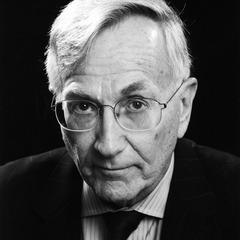
Seymour Hersh
Seymour Hersh

Seymour Hersh (born April 8, 1937) is an American investigative journalist and author. He is best known for exposing the My Lai Massacre during the Vietnam War, which earned him the 1970 Pulitzer Prize for International Reporting. His career spans decades, focusing on uncovering U.S. government secrets and scandals, including the Abu Ghraib prison abuse in Iraq. Known for his deep-dive reporting and challenging official narratives, Hersh has profoundly influenced journalism. more

You May Also Like

“I'm worried about people who say George W. Bush is lying. It's much more frightening that he's not lying, that he believes what he believes: that it's his mission to change the Middle East into a democracy. That's more unnerving. We'd be better off if the whole purpose of the adventure in Iraq was, say, to protect Israel or to protect the flow of oil to America and keep it at a reasonable price and try to get some more control. If it was about oil, going into Iraq, I guess, could have made sense.”

“Few knew in 2000 that George W. Bush was going to end up with neoconservatives all over the place. Once 9/11 happened, I think it's fair to say that some neocons have had an enormous influence. The whole solution to every problem was to go after Iraq. This had been a neoconservative mantra for ten years. Bush certainly sees himself as having been given an endorsement. He was asked why Donald Rumsfeld,Condoleezza Rice, and Paul Wolfowitz have been promoted, these people who led us into the debacle in Iraq. Bush said there was accountability-it was the election. So there we are.”

“If George W. Bush had gone into Iraq for cynical reasons, we could cut our losses now. What's frightening is that he did it for ideological reasons, and therefore he's not going to get out. So it isn't ultimately about oil or about Israel, it's about a belief. I don't know whether God talks to him or whether he's trying to undo what his father did. But he believes in the mission. The body bags aren't going to deter him. Public dissent isn't going to deter him.”

“It doesn't matter what a majority of Americans say. George W.Bush is going to do what he thinks he must do. And history may be tough on him in the next ten years but I guess he rationalizes that in fifty or 100 years they'll bless us because there will be - maybe not in his lifetime, but someday-a democratic Iraq emulating the United States in its liberalism, in its fair-mindedness, and that democracy will spread to Iran and Syria, and that whole part of the Middle East will be happy, and terrorism will be gone, and the Israelis will be flourishing, and the oil will flow. That's his vision.”

“At a meeting in her office in the late summer of 2002, months before the war in Iraq, prisoner abuse at Guantanamo is discussed. Condoleezza Rice brings in Donald Rumsfeld for a meeting, and they all agree they have to do something. Nothing gets done. Did everybody understand we were going to be as tough as we could be people we thought were Al Qaeda? Is there a better way to get information, get their trust, establish rapport, try to change their views? Nobody wants to think about that. It's just, let's beat them up. And that attitude was widespread throughout the Administration.”

“I would recommend any American who wants to understand where the government is going in the next four years of George W. Bush presidency to get a copy of her confirmation hearings before the Senate Foreign Relations Committee. It's a road map, and it's pretty frightening testimony. Their definition of where democracy should go in the Middle East doesn't include Egypt, Jordan, Saudi Arabia, Pakistan; it only includes Iraq, Iran, and Syria.”