“What else is it that should trace the insuperable line? Is it the faculty of reason or perhaps the faculty of discourse? But a full-grown horse or dog is beyond comparison a more rational, as well as more conversable animal, than an infant of a day or a week or even a month old. But suppose they were otherwise, what would it avail? The question is not, Can they reason?, nor Can they talk? but, Can they suffer? Why should the law refuse its protection to any sensitive being? The time will come when humanity will extend its mantle over everything which breathes.”
Quote by Jeremy Bentham
Work
An Introduction to the Principles of Morals and Legislation
Written by Jeremy Bentham, this seminal work delves into the philosophical concepts that inform moral reasoning and their relevance to the creation of laws. It is considered a cornerstone in the development of utilitarianism and has had a significant impact on legal theory and ethical philosophy. more
Author
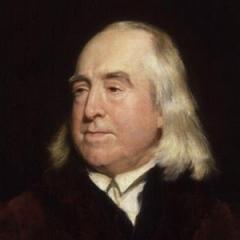
Jeremy Bentham
Jeremy Bentham was an English philosopher, jurist, and social reformer who lived from February 15, 1748, to June 6, 1832. He is best known for his work in moral philosophy, political theory, and legal reform, particularly his advocacy for the principle of utilitarianism. more