Quotessence
Home / Quotes / Quote by Alfred North Whitehead

Quote by Alfred North Whitehead

“Whenever a text-book is written of real educational worth, you may be quite certain that some reviewer will say that it will be difficult to teach from it. Of course it will be difficult to teach from it. It it were easy, the book ought to be burned.”

Quote by Alfred North Whitehead

Work

Aims of Education

This book delves into the fundamental purposes and principles of education, examining various theories and approaches to shaping the curriculum and the overall educational experience. more

Author

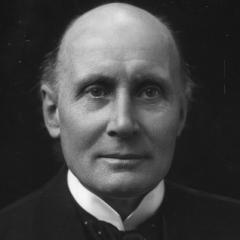
Alfred North Whitehead

Alfred North Whitehead was a British mathematician, philosopher, born on February 15, 1861, and died on December 30, 1947. He is known for his contributions to mathematics, logic, philosophy, and the philosophy of science, particularly for his co-authorship of 'Principia Mathematica' with Bertrand Russell. more

You May Also Like

“A multitude of words doth rather obscure than illustrate, they being a burden to the memory, and the first apt to be forgotten, before we come to the last. So that he that uses many words for the explaining of any subject, doth, like the cuttle-fish, hide himself, for the most part, in his own ink.”

“A parable: A man was examining the construction of a cathedral. He asked a stone mason what he was doing chipping the stones, and the mason replied, "I am making stones." He asked a stone carver what he was doing. "I am carving a gargoyle." And so it went, each person said in detail what they were doing. Finally he came to an old woman who was sweeping the ground. She said. "I am helping build a cathedral." ...Most of the time each person is immersed in the details of one special part of the whole and does not think of how what they are doing relates to the larger picture.”

“Since we think we understand when we know the explanation, and there are four types of explanation (one, what it is to be a thing; one, that if certain things hold it is necessary that this does; another, what initiated the change; and fourth, the aim), all these are proved through the middle term.”