Quotessence
Home / Quotes / Quote by Bai Juyi

Quote by Bai Juyi

Author

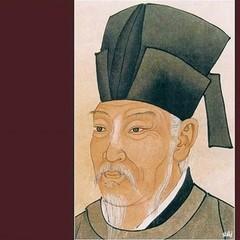
Bai Juyi
Bai Juyi

Bai Juyi (772-846), a renowned Tang Dynasty poet, known for his simple and accessible style. His poetry, characterized by its straightforward language and sincere emotions, has had a profound impact on Chinese literature. more

You May Also Like

“Love is not feeling, child, nor even the passion of lovers, which always seeks only its own gratification. It is the act of caring, of giving, the act of protecting the weak, the helpless, the imprisoned and the desperate. Love is the hand raised in defence. You cannot love and keep your hands clean.”

“The rule of God is not tyranny, for it does not partake of a political or governmental character -- it is not a rule of authority. God is not a governor of the universe, for a governor rules over those of a like nature with himself, and exercises a political and judicial power, while God exercises a creative, a preserving, and a determinative power of an altogether different kind. If I am a servant of God, I am under no tyranny; for God does not govern, but supports, sustains, and directs me.”

“God -- if he really exist -- is good, alive, self-conscious, and governs all things according to his benevolent and holy providence; but the world shows no indications of such a benevolent and holy Providence. This earth appears to be a hell, or at best a planet condemned -- a sort of purgatory: it is filled with violence, tyranny and injustice, and yet God, if he exist, is absolute sovereign, and has willed that things should be as they are! -- Therefore there is no God.”

“Society established gold and silver as a circulating medium and as a legal tender in order that exchanges of commodities might be facilitated; but society blundered in so doing; for, by this very act, it gave to a certain class of men the power of saying what exchanges shall, and what exchanges shall not, be facilitated by means of this very circulating medium. The monopolizers of othe precious metals have an undue power over the community: they can say whether money shall, or shall not, be permitted to exercise its legitimate functions.”