Quotessence
Home / Quotes / Quote by William Feather

Quote by William Feather

“[on education] It's knowing where to go to find out what you need to know, and it's knowing how to use the information once you get it.”

Quote by William Feather

Author
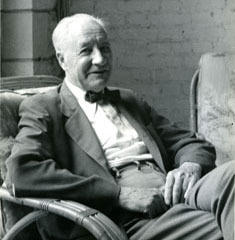
William Feather
William Feather

William Feather was an accomplished author whose works spanned various domains including business, history, and personal development. Born on August 25, 1889, and passing away on January 7, 1981, Feather had a writing career that spanned several decades. His books became bestsellers and had a profound impact on the business world. more

You May Also Like

“It is not the truth of Marxism that explains the willingness of intellectuals to believe it, but the power that it confers on intellectuals, in their attempts to control the world. And since, as Swift says, it is futile to reason someone out of a thing that he was not reasoned into, we can conclude that Marxism owes its remarkable power to survive every criticism to the fact that it is not a truth-directed but a power-directed system of thought.”

“The Pavlovian view of women voters - plug the words in, and they will respond - sends a chill down my spine because it sounds like an adaptation of something I have written about communication between the sexes: When a woman tells a man about a problem, she doesn't want him to fix it; she just wants him to listen and let her know he understands. But there's a difference between a private conversation and a presidential election, between what we want from our leaders.”

“Marriage hath in it less of beauty but more of safety, than the single life; it hath more care, but less danger, it is more merry, and more sad; it is fuller of sorrows, and fuller of joys; it lies under more burdens, but it is supported by all the strengths of love and charity, and those burdens are delightful.”

“The power of these recommendations is that they come from leaders representing a broad spectrum of religious conviction. At the table were people with Christian, Jewish, Muslim, Hindu, Native American and humanist perspectives, as well as individuals from advocacy groups ranging from the American Civil Liberties Union to the American Center for Law and Justice.”