Quotessence
Home / Quotes / Quote by Stewart O'Nan

Quote by Stewart O'Nan

“Alone again, with the house quiet around her, she thought not of Joan in her hospital gown but of Henry, the IVs taped to the bruised crook of his arm, how he'd asked her to take care of Arlene and not give up on their daughter Margaret, demands that even now seemed unfair, if not impossible. What would she ask, and of whom--God? There was no one else left.”

Quote by Stewart O'Nan

Work

Evensong

Evensong is a fictional narrative that delves into the lives of individuals within a religious community. The story examines the complexities of faith, the search for redemption, and the impact of personal beliefs on the characters' lives. more

Author

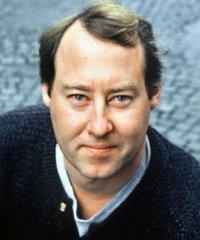
Stewart O'Nan
Stewart O'Nan

Stewart O'Nan is an American novelist known for his unique narrative style and profound insights into everyday life. His works often focus on the daily lives of ordinary people, depicting the complexity of human nature and the diversity of life through delicate pen strokes. more

You May Also Like

“Do not stand at my grave and weep I am not there; I do not sleep. I am a thousand winds that blow, I am the diamond glints on snow, I am the sun on ripened grain, I am the gentle autumn rain. When you awaken in the morning's hush I am the swift uplifting rush Of quiet birds in circled flight. I am the soft stars that shine at night. Do not stand at my grave and cry, I am not there; I did not die.”

“What I would give to have those usless things with me now, kneeling by my mother's tomb and resting my head against its rough surface. Not the tomb in the hamlet where she had died, but here, in Luzon, in the cemetery built by Harry just for authenticity's sake. When I had seen his field of stones, I had asked to have the biggest tomb for my own use. On the tombstone I had pasted a reproduction of my mother's black-and-white picture that I carried in my wallet, the only extant image of her besides the rapidly fading ones in my mind, which had taken on the quality of a poorly preserved silent movie, its frames cracked by hairline fractures. On the gray face of the tombstone I painted her name and her dates in red, the mathematics of her life absurdly short for anyone but a grade-schooler to whom thirty-four-years seemed an eternity. Tombstone and tomb were cast from adobe rather than carved from marble, but I took comfort in knowing no one would be able to tell on film. At least in this cinematic life she would have a resting place fit for a mandarin's wife, an ersatz but perhaps fitting grave for a woman who was never more than an extra to anyone but me.”