“If we ask why such a man lapsed into heresy, the psychological answer, for what it is worth, lies on the surface. He was incurably a logician, his whole temper was impatient of compromises, of halfway houses. And in the debate which probably went on in his age, as it does in most ages of the Church, between the people who want to screw up the standard of Church discipline and the people who would adjust it to the weakness of human nature, he inevitably found his true home among the extremists. Not because he was a saintly idealist, with Wesley's distrust of the 'almost Christian', but because his intellectual bias impelled him towards the party of consistency; he preferred rigorism, not because it was a harder rule to live by, but because it was an easier principle to defend. Where was the sense in belauding martyrdom, yet allowing Christians to take refuge in flight when persecution threatened? Why should absolution be refused to the man who had denied his faith under torture, and then granted to the adulterer, who could make no plea of duress? We do not know what personal or accidental motives may have contributed to his false decision; but it is not difficult, I think, to see that decision as congenial to the bent of his mind.”
Quote by Ronald Knox
Work
Enthusiasm: A Chapter in the History of Religion
Browse quotes and source details for this work. more
Author
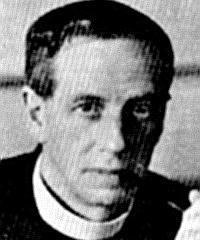
Ronald Knox
Ronald Knox was a British author celebrated for his detective fiction, a genre to which he made significant contributions during the Golden Age of Detective Fiction. Born on February 17, 1888, his work is recognized for its intricate plots and richly developed characters. He passed away on August 24, 1957. more
You May Also Like
Source: Headscarves and Hymens: Why the Middle East Needs a Sexual Revolution
Source: The Assassination Complex: Inside the Government's Secret Drone Warfare Program
Source: Because They Hate: A Survivor of Islamic Terror Warns America
Source: A Writer's Year: Fennel's Journal No. 3
Source: The machinery of freedom: guide to a radical capitalism
Source: Theories of Democracy: A Reader