Quotessence
Home / Quotes / Quote by Ludwig Feuerbach

Quote by Ludwig Feuerbach

“[H]eavenly personality, or the perpetuation of human personality in heaven is nothing else than personality released from all earthly encumbrances and limitations[.] [H]ere we are men, there gods[.]”

Quote by Ludwig Feuerbach

Work

Essence of Christianity

Browse quotes and source details for this work. more

Author
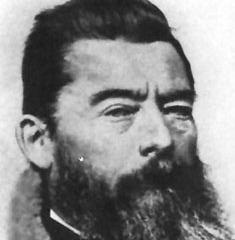
Ludwig Feuerbach
Ludwig Feuerbach

Ludwig Feuerbach, a prominent German philosopher born on July 28, 1804, and died on September 13, 1872. He was a significant figure in the German classical philosophy and had a profound impact on the birth of Marxist philosophy. more

You May Also Like

“...the shape of one’s palm is also connected to the elements of earth, air, fire, water, and akasha. Earth palms are square and thick, and those defined by earth are practical in nature. Water is associated with long palms and long fingers and with intuition. Air palms are narrow and bony, their natures more analytical. With my long palms and short fingers, I sway toward fire—passionate, risk-taking, and driven by desire.”

“Spring is such a hopeful time on the island, and despite the pall that continues to hover over our nation, I find it impossible to resist. The air is still chilly as a well-digger's ear first thing in the morning, but as the hours pass it hints at the warmth to come in later months. As the days become longer, the rains change. They are less punishing and more promising, bringing out the native grasses and glimpses of green on the trees. Then there are the little families of deer, grazing as if the entire island is a spring buffet, and wild rabbits are hopping everywhere.”

“The harder life got, the more pliantly Nina Alexandrovna responded to its random and weak smiles, which might not have meant anything like what she was seeing from her perspective. Even she guessed how easy it was to buy her with the mere sight of a baby in a stroller or, say, the scene of a friendly conversation, when two men who were utter strangers to Nina Alexandrovna, perfumed youth wearing expensive clothing made somewhere that had to be overseas, simply clapped each other on the shoulder—but she was willing to value herself more and more cheaply because she lacked even crumbs of kindness for her emotional moisture to soften into a warm pap. Now, too, looking at her son-in-law digging the soft, thick, whitened mass out of the bowl with increasing enthusiasm, Nina Alexandrovna believed he might find a good job soon and the family wouldn’t have to stretch itself so thin waiting for pension day.”