Quotessence
Home / Quotes / Quote by Hamza Yusuf

Quote by Hamza Yusuf

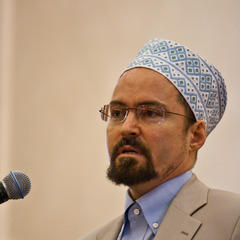
“A sound heart has knowledge and trust, not doubt and anxiety. Shubuhāt alludes to aspects closely connected to the heart: the soul, the ego, Satan’s whisperings and instigations, caprice, and the ardent love of this ephemeral world. The heart is an organ designed to be in a state of calm, which is achieved with the remembrance of God: Most surely, in the remembrance of God do hearts find calm (QURAN, 13:28). This calm is what the heart seeks out and gravitates to. It yearns always to remember God the Exalted. But when God is not remembered, when human beings forget God, then the heart falls into a state of agitation and turmoil. In this state it becomes vulnerable to diseases because it is undernourished and cut off, Cells require oxygen, so we breathe, If we stop breathing, we die. The heart also needs to breathe, and the breath of the heart is none other than the remembrance of God. Without it, the spiritual heart dies. The very purpose of revelation and of scripture is to remind us that our hearts need to be nourished.”

Quote by Hamza Yusuf

Work

Author

Hamza Yusuf
Hamza Yusuf

Hamza Yusuf, born in 1958, is a renowned scholar, writer, and speaker. His areas of expertise include Islam, religious philosophy, and cross-cultural communication. Hamza Yusuf is highly respected in the academic and religious communities for his in-depth research and dissemination of Islamic teachings. more

You May Also Like

“The three dimensions of Sufi teaching: the Law, the Way, and the Truth; or knowledge, works, and attainment to God; or theory, practice, and spiritual realization. Knowledge of God, man, and the world derives ultimately from God Himself, primarily by means of revelation, – in the context of Islam – the Koran and the Hadith of the Prophet; and secondarily by means of inspiration or „unveiling“, the spiritual vision of the saints, or the realized Sufis. Knowledge provides the illumination whereby man can see everything in its proper place. (p. 11)”

“The Sufi Way is to follow the model provided by the Prophet‘s representatives on earth, the saints, who are the shaykhs or the spiritual masters. Once having entered the Way, the disciple begins to undergo a process of inward transformation. If he is among those destined to reach spiritual perfection, he will climb the ascending rungs of a ladder stretching to heaven and beyond; the alchemy of the Way will transmute the base copper of his substance into pure and noble gold. The Truth or „attainment to God“ is not a simple, one-step process. It can be said that this third dimension of Sufi teaching deals with all the inner experiences undergone by the traveler on his journey. It concerns all the „virtues“ (akhlaq) the Sufi must acquire, in keeping with the Prophet‘s saying, „Assume the virtues of God!“ If acquiring virtues means „attaining to God,“ this is because they do not belong to man. The discipline of the Way coupled with God‘s grace and guidance results in a process of purification whereby the veil of human nature is gradually removed from the mirror of the primordial human substance, made in the image of God, or, in the Prophet‘s words, „upon the Form of the All-Merciful.“ Any perfection achieved by man is God‘s perfection reflected within him. (p. 11-12)”

“Already in this world the perfect Sufis live with God. They journey into the Infinite, listening to the music of God’s creative command. At each moment God says “Be” and a new selfdisclosure, more glorious and perfect than the preceding, delights the eye. In the words of Iraqi, The song will never cease, nor the dance come to an end, for all eternity, because the Beloved is infinite.”

“Bir şeye inandığınız anda, gücünüzü o inanca teslim etmiş oluyorsunuz. Bunu biliyor muydunuz? Hasta olmanıza şaşmamalı! Kendinizi iyileştirememenize şaşmamalı! Hiçbir şey Hiçbir şey yapamıyorsunuz; çünkü, düşüncelerinizin tek kaynağı, başkalarının ne düşündükleridir. Halbuki elinizin altında deha hazır bekliyor. ''Toplumsal Bilinç'' denen bilinç düzeyinde yaşıyorsunuz. Başkalarının sınırlı düşüncelerine göre yaşıyorsunuz. Bir ''sürü'' gibi yaşıyorsunuz. Bunu yaptığınızda da gücünüzü teslim ediyorsunuz.”

“In Sufism we understand the human being to be composed of three aspects: self, heart, and spirit. Self is the experience of our personal identity, including our thoughts and emotions. Heart is something deeper, experienced through an inner knowing, often with a quality of compassion, conscience, and love. It can ultimately lead to the recognition of the deepest part of ourselves - our inmost consciousness, or Spirit, the reflection of God within us. If we simply say that souls is our inner being, then the quality of our inner being, or soul, is the result of the relationship between self and our innermost consciousness, Spirit. The self without the presence of spirit is merely ego, the false mask, which is governed by self-centered thoughts and emotions. The more the self becomes infused with spirit, the more „soulful“ it becomes. We use the words presence and remembrance to describe the conscious connection between self and Spirit. The more we live mindfully with presence, the more we remember God, and the more soulful we are, the more we drop the mask. Care of the soul, then, is always the cultivation of presence and remembrance. Presence includes all the ways we mindfully attend to our lives. Soul is the child of the union of self and spirit. When this union has matured, the soul acquires substance and structure. That is why it is said in some teachings that we do not automatically have a soul; we must acquire one through our spiritual work. (p. 75)”