Quotessence
Home / Quotes / Quote by Bruce Catton

Quote by Bruce Catton

“There is no other legend quite like the legend of the Confederate fighting man. He reached the end of his haunted road long ago. He fought for a star-crossed cause and in the end he was beaten, but as he carried his slashed red battle flag into the dusky twilight of the Lost Cause he marched straight into a legend that will live as long as the American people care to remember anything about the American past.”

Quote by Bruce Catton

Author
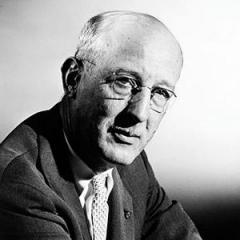
Bruce Catton
Bruce Catton

Bruce Catton was an American historian renowned for his works on the American Civil War. His writing style, marked by clarity and narrative power, made complex historical events understandable to a broad audience. Catton was awarded the Pulitzer Prize for History in 1953 for his book 'The Civil War: A Narrative'. more

You May Also Like

“Before they came in Lee had a couple of adventures. He first clashed with a sergeant of a Mississippi regiment who wandered over the wet field. Lee called out sharply: "What are you doing here, sir, away from your command?" "That's none of your business," the ragged soldier said. "You are a straggler, sire, and deserve the severest punishment." The sergeant shouted in rage, "It is a lie, sir. I only left my regiment a few minutes ago to hunt me a pair of shoes. I went through all the fight yesterday, and that's more than you can say; for where were you yesterday when General Stuart wanted your cavalry to charge the Yankees after we put 'em to running? You were lying back in the pine thickets and couldn't be found; but today, when there's no danger, you come out and charge other men with straggling." Lee laughed and rode off. Behind him an officer baited the sergeant, who thought he had been talking with a "cowardly Virginia cavalryman". "No, sir, that was General Lee." "Ho-o-what? General Lee, you say?" "Yes." "Scissors to grind, I'm a goner." The sergeant tore out of sight along the muddy road.”

“While President Jefferson Davis in Richmond and his own soldiers continued to support him with unwavering trust, Gen. Lee wrestled with his own demons, including his ill-fated invasion of Pennsylvania, which had been successful through the first day of fighting at Gettysburg. Other more tangible challenges included his ongoing concern about the well-being of his men due to a lack of adequate supplies, and by his own lingering health problems. His “violent back pains” were probably the result of the chronic heart problems that would kill him in 1870.10”

“by spring 1862 it became universal throughout Confederate regiments for the soldiers to elect their leaders from colonel down to sergeants, the very imposition of military democracy that would lead some to bemoan the demagoguery and wire-pulling with the men in order to seek election.”

“Isaac, the black body servant of Colonel John Nisbet of the Sixty-sixth Georgia, joined his master in the breastworks from time to time to try his hand at shooting Yankees. Amos Rucker was technically a body servant in another Georgia regiment, but it was "well known that he was in the fights around Atlanta on several occasions". When Rucker died many years later, his former comrades-in-arms saw to it that he was laid to rest in the uniform of the Confederate States Army.”

“Probably the biggest laugh of all that rainy night was at the expense of Private T.C. Green of the Second Regiment. Before the battle Green had been outspoken in the number of Federals he intended killing, and at day's end went through the camp recounting how many of the enemy he had shot before something went wrong with his gun. When a messmate examined the weapon, he found that the gun had not been fired at all, but was full of unexploded charges. In his excitement Green had gone through the motions of loading and firing, but had omitted some essentials, such as changing caps and pulling the trigger, and hence had done absolutely no harm to the enemy.”

“Chancellorsville marked the culmination of achievement for Lee's "glorious army" that remains indelibly etched in the nation's history. No American army, against such odds and in less than a year, compiled such a record as that of the Army of Northern Virginia, and none altered the direction of a conflict more.”

“The Army of Northern Virginia was also developing its own distinctive character. It had a harder, more tragic fate, and yet there is more laughter in its legend - as if, in some unaccountable way, it worried less. Out of hardship, intermittent malnutrition, and desperately-won victories it was creating a lean, threadbare jauntiness. Beneath this was the great Characteristic which it derived from its commander - the resolute belief that it could not really be beaten no matter what the odds might be. It had paid many lives for that conviction and it would pay many more before it reached the last turn in the road, but what it got seems to have been worth the price.”

“The Army of Northern Virginia kept moving, one heavy foot after another, marching through a trance. Hour after hour it diminished. Its line of march now was marked as it had never been marked now - by hundreds and hundreds of abandoned muskets, some just dropped by the roadside, other standing butt-upward, bayonets thrust in the ground: weapons discarded by men who had given up and drifted out of the ranks. Many of these men, beaten and weaponless, continued to tramp along with the army, staying where Lee was because he was the only man they could be sure about in their disintegrating world.”