“To divert myself from a troublesome fancy, it is but to run to my books; they presently fix me to them, and drive the other out of my thoughts, and do not mutiny to see that I have only recourse to them for want of other more, real, natural, and lively conveniences; they always receive me with the same kindness.”
Quote by Michel de Montaigne
Work
Works of Michael de Montaigne: Comprising his essays, journey into Italy, and letters
The book is a compilation of Michael de Montaigne's seminal works, featuring his philosophical essays, personal reflections on his journey to Italy, and his extensive correspondence. Montaigne's essays are renowned for their introspection and exploration of human nature, while his journey into Italy offers insights into the Renaissance culture and society. The letters provide a glimpse into Montaigne's personal life and thoughts. more
Author
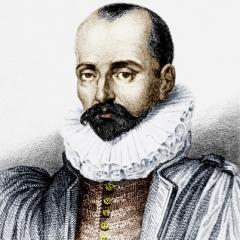
Michel de Montaigne
Michel de Montaigne was a French Renaissance philosopher, essayist, and writer. He is considered one of the most significant figures in the history of the essay. Montaigne's work, particularly his book 'Essays', has been influential in the development of modern prose. more
You May Also Like
“The curiosity of knowing things has been given to man for a scourge.”
Source: All the Essays of Michael Seigneur de Montaigne
Source: Montaigne's Essays in Three Books: With Notes and Quotations. And an Account of the Author's Life. With a Short Character of the Author and Translator
Source: Annotated Essays of Michel de Montaigne with English Grammar Exercises: by Michel de Montaigne (Author), Robert Powell (Editor)
Source: Essays of Michael Seigneur de Montaigne: In Three Books with Marginal Notes and Quotations. And an Account of the Author's Life. With a Short Character of the Author and Translator,
Source: The Works of Michael de Montaigne: Comprising His Essays, Letters, and Journey Through Germany and Italy
“Lovers are angry, reconciled, entreat, thank, appoint, and finally speak all things, by their.”
Source: The Essays of Michael de Montaigne
Source: The Works of Michael de Montaigne: Comprising His Essays, Letters, and Journey Through Germany and Italy
Source: All the Essays of Michael Seigneur de Montaigne