Quotessence
Home / Quotes / Quote by Eric Hoffer

Quote by Eric Hoffer

“A peculiar side of credulity is that it is often joined with a proneness to imposture. The association of believing and lying is not characteristic solely of children. They inability or unwillingness to see things as they are promotes both gullibility and charlatanism.”

Quote by Eric Hoffer

Work

THE TRUE BELIEVER

This book delves into the reasons why people become fervent adherents of various ideologies, exploring the psychological and social factors that drive individuals to commit to causes and movements. It analyzes the dynamics of groupthink, the allure of charismatic leaders, and the psychological needs that are often satisfied through membership in such groups. more

Author

Eric Hoffer
Eric Hoffer

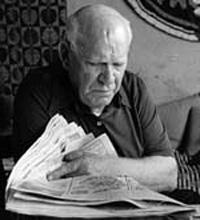
Eric Hoffer was an American philosopher known for his profound insights into human nature. His works often explore society, politics, and human behavior, particularly focusing on the experiences of the underclass. Hoffer came from a German immigrant family and worked in various jobs in California during his youth, including dockworker, cook, and gardener. His first book, 'The Ordeal of Change', was published in 1950 and quickly became a bestseller, gaining him widespread recognition. His other works include 'The Ordeal of Change' and 'The True Believer' among others. more
You May Also Like

“We like things to be black or white, tall or short, here or there. We like to consider two sides to every story. Unfortunately, there aren't always two sides. Sometimes there's only one; more often, there are multitudes. Many facets on the stone. Nooks and crannies in abundance. Things are usually not either black or white, but multicolored.”

“Small people delight in what they call consistency-that is, it gives them immense pleasure to say that they believe now exactly as they did ten years ago. This simply amounts to a certificate that they have not grown-that they have not developed-and that they know just as little now as they ever did. The highest possible conception of consistency is to be true to the knowledge of today, without the slightest reference to what your opinion was years ago.”

“The historian should be fearless and incorruptible; a man of independence, loving frankness and truth; one who, as the poets says, calls a fig a fig and a spade a spade. He should yield to neither hatred nor affection, not should be unsparing and unpitying. He should be neither shy nor deprecating, but an impartial judge, giving each side all it deserves but no more. He should know in his writing no country and no city; he should bow to no authority and acknowledge no king. He should never consider what this or that man will think, but should state the facts as they really occurred.”