Quotessence
Home / Quotes / Quote by Frederick Soddy

Quote by Frederick Soddy

“The real value of science is in the getting, and those who have tasted the pleasure of discovery alone know what science is. A problem solved is dead. A world without problems to be solved would be devoid of science.”

Quote by Frederick Soddy

Work

Matter and energy

This book delves into the intricate relationship between matter and energy, examining their properties, interactions, and implications in the scientific world. more
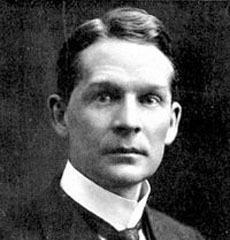
Author

Frederick Soddy
Frederick Soddy

Frederick Soddy was a British chemist renowned for his contributions to the study of radioactive elements. He won the Nobel Prize in Chemistry in 1903 for his discovery of isotopes, becoming the first Briton to receive the award. Soddy's research had a profound impact on understanding atomic structure and the processes of radioactive decay. more

You May Also Like

“The regularity with which we conclude that further advances in a particular field are impossible seems equaled only by the regularity with which events prove that we are of too limited vision. And it always seems to be those who have the fullest opportunity to know who are the most limited in view. What, then, is the trouble? I think that one answer should be: we do not realize sufficiently that the unknown is absolutely infinite, and that new knowledge is always being produced.”

“The saying that a little knowledge is a dangerous thing is, to my mind, a very dangerous adage. If knowledge is real and genuine, I do not believe that it is other than a very valuable posession, however infinitesimal its quantity may be. Indeed, if a little knowledge is dangerous, where is a man who has so much as to be out of danger?”

“The whole question of imagination in science is often misunderstood by people in other disciplines. ... They overlook the fact that whatever we are allowed to imagine in science must be consistent with everything else we know.”

“The whole value of science consists in the power which it confers upon us of applying to one object the knowledge acquired from like objects; and it is only so far, therefore, as we can discover and register resemblances that we can turn our observations to account.”