“The person whose clothes are extremely fine I am too apt to consider as not being possessed of any superiority of fortune, but resembling those Indians who are found to wear all the gold they have in the world in a bob at the nose.”
Quote by Oliver Goldsmith
Work
The works of Oliver Goldsmith. 2: Enquiry into the present state of polite learning; The citizen of the world
This volume includes two seminal essays by Oliver Goldsmith. The first, 'Enquiry into the Present State of Polite Learning,' delves into the state of education and intellectual pursuits. The second, 'The Citizen of the World,' is a philosophical treatise on the nature of global citizenship and human connections. more
Author
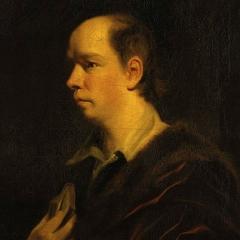
Oliver Goldsmith
Oliver Goldsmith was an Irish novelist, playwright, poet, and physician. He is best known for his novel 'The Vicar of Wakefield' and his plays 'She Stoops to Conquer' and 'The Good-Natur'd Man'. Goldsmith's works are characterized by their wit, humor, and moral depth. more
You May Also Like
Source: The Works of Oliver Goldsmith: The bee. Essays. Unacknowledged essays. Prefaces, introductions, etc
“It world be well had we more misers than we have among us.”
Source: Letters from a citizen of the world (concluded). The Bee, a select collection of essays, on the most interesting and entertaining subjects
Source: The Works of Oliver Goldsmith
Source: The Works of Oliver Goldsmith: Comprising His Poems, Comedies, Essays, and Vicar of Wakefield
Source: His Works
Source: Goldsmith's miscellaneous works
Source: Essays and poems, by Dr. Oliver Goldsmith. To which are prefixed, memoirs of the author
Source: Miscellaneous Works: To which is Prefixed Some Account of His Life and Writings
Source: The Miscellaneous Works: Letters from a citizen of the world, to his friend in the East. A familiar introduction to the study of natural history
“Eternal blessings crown my earliest friend, And round his dwelling guardian saints attend.”
Source: The Miscellaneous Works: Poems. Miscellaneous pieces. Dramas. Criticism relating to poetry and the belles-lettres