Quotessence
Home / Quotes / Quote by Nick Bostrom

Quote by Nick Bostrom

Work

Superintelligence: Paths, Dangers, Strategies

This book delves into the potential developments of artificial intelligence, discussing the various paths it might take, the dangers it poses, and the strategies that could be employed to manage these risks. more

Author
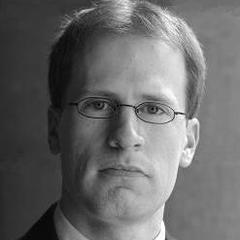
Nick Bostrom
Nick Bostrom

Nick Bostrom is a Swedish philosopher known for his research in philosophy, artificial intelligence, and the future of humanity. His work covers a range of topics including consciousness, artificial intelligence, human continuation, and bioethics. more

You May Also Like

“It is, as calls to arms go, straightforward. Crystal clear. And if you aren’t looking forward to Spurs and Kazan, to Southampton and Bournemouth, if that just doesn’t get you going, wanting to be emotional, unashamedly emotional, optimistic, passionate in a way that outsiders love to mock and our own meek minded souls call 'embarrassing' then you know what? There’s the door. There is the door, and you can walk through it, and both you and us will be happier for that. Because, for ninety minutes every few days, this fella represents Liverpool, eleven lads wearing Red represent Liverpool and we represent Liverpool. Wherever we are on globe, with an even greater responsibility if we are in the stadium.”

“This lad is an elite European coach. One of a select group of about half a dozen managers working in the world game today. The other five only take jobs with clubs that guarantee squads and trophies that will further enhance their already muscular CVs. Klopp doesn’t seem to need that in his life. He is truly a throwback. A contradiction in many senses – for instance he seems to have no problem being a shameless shill in doing adverts for some heavy weight corporations (Puma, Opel and others) and yet it is hard to escape the conclusion that here is a man on a mission that represents something more honest.”

“This is where the music starts to slow. Because, let’s face it, the fact remains that in two decades since his arrival Wenger has had a greater, more visible – albeit rather tenuous – influence on Germany’s world champions than he has on the current England team. Despite being the only long-serving Premier League-era manager with any real sway or heft in the wider world – coach of five of France’s world champions in 1998 – he will leave no real mark on English football development or theory. Rather than cherished, brain selectively picked, Wenger is instead quietly mocked these days, cast as a cobwebbed crank, some doomed, sad stone knight still tending the hearth, a little creaky and mad, friends only with the flies and the beetles and the spiders.”