Quotessence
Home / Quotes / Quote by Zora Neale Hurston

Quote by Zora Neale Hurston

“Oh, dey put me under arrest one day for vacancy in Bartow. When de judge found out Ah had a job of work. He took and searched me and when he found out Ah had a deck of cards on me, he charged me wid totin' concealed cards, and attempt to gamble, and gimme three months. Then dey made out another charge 'ginst me. 'Cused me of highway shufflin', and attempt to gamble. You know dese white folks sho hates tuh turn a n****r loose, if every dey git dey hands on 'im.”

Quote by Zora Neale Hurston

Work

Mules and Men

Browse quotes and source details for this work. more

Author

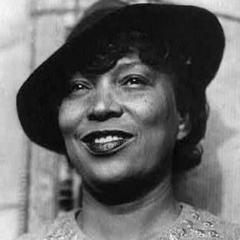
Zora Neale Hurston
Zora Neale Hurston

Zora Neale Hurston (1891-1960) was an American anthropologist, folklorist, and novelist who played a pivotal role in the Harlem Renaissance. Born in Alabama and raised in Eatonville, Florida, she became the first African American student at Barnard College, Columbia University, studying under Franz Boas. Hurston is best known for her novel "Their Eyes Were Watching God," now considered a classic of American literature. She conducted extensive anthropological fieldwork in the American South and Caribbean, preserving African American folk traditions. Though largely forgotten after her death, her work was revived by Alice Walker in the 1970s, establishing her as a foundational figure in African American literature and anthropology. more

You May Also Like

“Since I didn’t like the law or the consequences for breaking it, I lived in denial of it. But pretending as if it weren’t there did not make it disappear. So, I retaliated against those who represented it. If I couldn't divert the consequences, I diverted the blame. I blamed the police for my consequences. I blamed them for “ruining my life.” I blamed them for my arrests. I refused to accept that it was my fault for breaking the law in the first place. Blaming others allowed me to keep believing whatever I wanted and acting however I wanted.”

“Walaupun orang Yahudi yang berpengaruh tidak mengamalkan agama Yahudi, malah, seperti Einstein, mungkin menolak agama itu sama sekali, namun kesetiaan kepada nasib dan masa hadapan bangsa Yahudi amat mendalam. Mereka mempunyai tradisi ilmu yang lama, berpunca dari kitab Taurat dan tulisan Rabbi dan cendekiawan mereka. Mereka menghayati apa yang disebut oleh Eban sebagai "satu keghairahan mencari makna" (passion for meaning) yang telah membuat mereka berusaha mengharungi segala kesusahan sepanjang sejarah.”