Quotessence
Home / Quotes / Quote by Sylvia Plath

Quote by Sylvia Plath

“She has folded Them back into her body as petals Of a rose close when the garden Stiffens and odours bleed From the sweet, deep throats of the night flower. The moon has nothing to be sad about, Staring from her hood of bone.”

Quote by Sylvia Plath

Book:Ariel

Work

Ariel

Ariel is a captivating tale that delves into a richly imagined universe, following the journey of a protagonist as they navigate a world filled with magic and mystery. The story delves into themes of self-discovery and the quest for identity, all within an immersive narrative that blends elements of fantasy and adventure. more
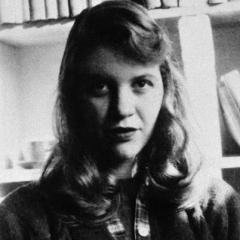
Author

Sylvia Plath
Sylvia Plath

American poet, novelist, and playwright. Her works are known for their profound emotion and unique style, and she is considered one of the most important female writers of the 20th century. more

You May Also Like

“The nautilus shell was exquisite, brown and white and perfectly striped. The math that lay like a dazzling creation spell over all who lived in the sea showed clearly in the spiral, each cell as great as the sum of the two previous sections. Everything in the ocean was a thing of beauty and numbers, even in death. Mermaids could live for a long time, but their bodies became foam that dissipated into nothing when they died. The poor little mollusk who lived in this shell had a very short life, but his shell could last for centuries. Ariel sighed and brushed her fingers over it, feeling strangely melancholy despite the triumph she literally held in her hands. Years of being mute could be swept away in a second. Years of frustration, years of silent crying, years of anger. And then what? If she destroyed it, what would it change?”

“She sang. Wordless hymns of the sea: immediate, extemporized passages about waves and sunlight and tides and the constant, beautiful pressure of water on everything. The glory of seaweed slowly swaying, the delicious feeling that foretold a storm in the Dry World and turbulence below. The music came out of her without pause, driven by years of observing, seeing, listening, enjoying, experiencing the world and unable to express it. The wonder and sadness of being alive. The joy of being a mermaid; the pain of being the only one like herself- the only mermaid who had been mortal, temporarily, and then lost everything.”

“Mermaid queens didn't often have a reason to move quickly. There were no wars to direct, no assassination attempts to evade, no crowds of clamoring admirers to avoid among the merfolk. In fact, slowness and calm were expected of royalty. So Ariel found herself thoroughly enjoying the exercise as she beat her tail against the water- even as it winded her a little. She missed dashing through shipwrecks with Flounder, fleeing sharks, trying to scoot back home before curfew. She loved the feel of her powerful muscles, the way the current cut around her when she twisted her shoulders to go faster. She hadn't been this far up in years and gulped as the pressure of the deep faded. She clicked her ears, readying them for the change of environment. Colors faded and transformed around her from the dark, heady slate of the ocean bottom to the soothing azure of the middle depths and finally lightening to the electric, magical periwinkle that heralded the burst into daylight. She hadn't planned to break through the surface triumphantly. She wouldn't give it that power. Her plan was to take it slow and rise like a whale. Casually, unperturbed, like Ooh, here I am. But somehow her tail kicked in twice as hard the last few feet, and she exploded into the warm sunlit air like she had been drowning. She gulped again and tasted the breeze- dry in her mouth; salt and pine and far-distant fires and a thousand alien scents.”

“Queen Ariel held the nautilus and considered thoughtfully. But the little mermaid didn't think. She acted. Before she realized fully what she was doing Ariel had smashed the nautilus on a sharply faceted rock. It didn't break like a normal shell. It shattered like a human vessel. Shards flew in all directions equally, unhampered by gravity or luck. Ariel pitched forward. She choked, no longer breathing the air of the Dry World. Her arms flailed up like a puppet's. Her torso whipped back and forth, pummeled by unseen forces. Something flew into her mouth, up her nose, and suffused her entire body with a heat that threatened to burn. It rushed into her lungs and expanded, expelling whatever breath she had left, pushing blood to her extremities, pushing everything out that wasn't it, leaving room for nothing else. Ariel collapsed. It was over. It was like the thing, whatever it was, had been absorbed by her body and had now dissipated into her blood and flesh. She took a breath. Her heart started beating again. She hadn't been aware it had stopped. She coughed. A few grains of sand came out. And then she sang.”

“She had the voice of the gods, some had said. The sort of voice that could lure landlubbers to sea and sailors to their deaths, a voice that could launch a thousand ships. She had the voice of the wind and the storm and the crash of the waves and the ancient speech of the whale. She had the voice of the moon as it glided serenely across the sky and the stars as they danced behind. She had the voice of the wind between the stars that mortals never heard, that rushed and blew and ushered in the beginning and end of time.”