Quotessence
Home / Quotes / Quote by William Bateson

Quote by William Bateson

“Of the contributions made during the essayist period three call for notice: Weismann deserves mention for his useful work in asking for the proof that "acquired characters" or, to speak more precisely, parental experience can really be transmitted to the offspring. The ocurrence of progressive adaptation by transmission of effects of use had seemed so natural to Darwin and his contemporaries that no proof of the physiological reality of the henomenon was thought necessary. Weismann's challenge revealed the utter inadequacy of the evidence on which the beliefs were based. They are doubtless isolated observations which may be interpreted as favouring the belief in these transmissions, but such meagre indications as exist are by general consent admitted to be too slight to be of much assistance in the attempt to understand how the more complex adaptive mechanisms arose.”

Quote by William Bateson

Work

Mendel's Principles of Heredity

Browse quotes and source details for this work. more

Author
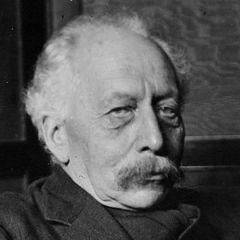
William Bateson
William Bateson

William Bateson, born on August 8, 1861 and died on February 8, 1926, was an influential British geneticist. His contributions to the field of genetics, particularly in the concepts of genes and genetic crossing, were pivotal. Bateson's work has had a profound impact on the development of genetics. more

You May Also Like

“Your Life Is Happening Right Now: Don't let procrastination take over your life. Be brave and take risks. Your life is happening right now.”

“The things you experience," she continued, "are written on your cells as memories and patterns, which are reprinted again on the next generation. And even if you never lift a shovel or plant a cabbage, every day of your life something is written upon you. And when you die, the entirety of that written record returns to the earth. All we have on this earth, all we are, is a record. Maybe the only things that persist are----copies of things. The original has long since passed away from this universe, but on and on we copy. I have devoted my miniscule life to the act of copying.”

“...imitation supplements inadequate congenital variations in the direction of an instinct, and so, by keeping the creature alive, sets the trend of further variations in the same direction until the instinct is fully organized and congenital. If both of these views be true, as there seems reason to believe, then imitation holds a remarkable position in relation to intelligence and instinct. It stands midway between them and aids them both. In some functions it keeps the performance going, and so allows of its perfection as an instinct; in others it puts a stress on intelligence, and so allows the instinct to fall away, if it have no independent utility in addition to that served by the intelligence. In other words, it is through imitation that instincts both arise and decay; that is, some instincts are furthered, and some suppressed, by imitation.”

“Eugenics is not just a tool of totalitarianism. Eugenics, as it was conceived, could not be anything but totalitarian as it desired to control all aspects of society. Hitler’s “National Socialist” (Nationalsozialist) form of government was amongst the first to put the full force of its government to conduct compulsory health initiatives. It is by no coincidence that the Dachau concentration camp used its slave-labor to run the largest organic produce farm of the era.”

“It is true that humans have physical differences, and some of those differences are spread geographically across the plant. But clinging to old notions about race won't help us understand the nature of those differences—both the ones we can see and the ones we can't.”

“In addition to the often unsatisfactory cards dealt to us by heredity...each of us will, throughout our lives, suffer innumerable encounters with disease, injury, emotional trauma, and personal defeat. These stochastic encounters are cumulative, and many of them will even come to shape core parts of our beings. But are our identities inextricably linked to our imperfections, struggles and genetic blemishes?”