“I love him who scattereth golden words in advance of his deeds, and always doeth more than he promiseth: for he seeketh his own down-going.”
Quote by Friedrich Nietzsche
Work
Thus Spoke Zarathustra, Beyond Good and Evil, Hellenism & Pessimism – 3 Unbeatable Philosophy Books in One Volume: The Birth of Tragedy
This collection brings together four seminal texts by the German philosopher Friedrich Nietzsche, exploring themes of individuality, morality, and the nature of existence. 'Thus Spoke Zarathustra' introduces the concept of the Übermensch, 'Beyond Good and Evil' delves into the reevaluation of values, 'Hellenism & Pessimism' examines the decline of European culture, and 'The Birth of Tragedy' discusses the origins of Greek tragedy. These works are renowned for their profound impact on philosophy and continue to be studied for their insights into human nature and the human condition. more
Author
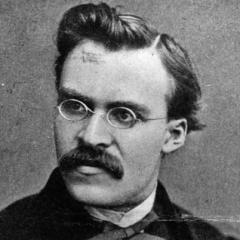
Friedrich Nietzsche
Friedrich Nietzsche was a German philosopher, cultural critic, poet, and writer whose works have had a profound impact on subsequent philosophy, literature, and thought. His ideas revolve around concepts such as the 'will to power', the 'Übermensch', and the 'eternal recurrence'. more
You May Also Like
Source: THUS SPOKE ZARATHUSTRA (Modern Classics Series): The Magnum Opus of the World’s Most Influential Philosopher, Revolutionary Thinker and the Author of The Antichrist, The Birth of Tragedy & Beyond Good and Evil
Source: THUS SPOKE ZARATHUSTRA (Modern Classics Series): The Magnum Opus of the World’s Most Influential Philosopher, Revolutionary Thinker and the Author of The Antichrist, The Birth of Tragedy & Beyond Good and Evil
Source: THUS SPOKE ZARATHUSTRA (Modern Classics Series): The Magnum Opus of the World’s Most Influential Philosopher, Revolutionary Thinker and the Author of The Antichrist, The Birth of Tragedy & Beyond Good and Evil
Source: THUS SPOKE ZARATHUSTRA (Modern Classics Series): The Magnum Opus of the World’s Most Influential Philosopher, Revolutionary Thinker and the Author of The Antichrist, The Birth of Tragedy & Beyond Good and Evil
Source: THUS SPOKE ZARATHUSTRA (Modern Classics Series): The Magnum Opus of the World’s Most Influential Philosopher, Revolutionary Thinker and the Author of The Antichrist, The Birth of Tragedy & Beyond Good and Evil
Source: Thus Spoke Zarathustra, Beyond Good and Evil, Hellenism & Pessimism – 3 Unbeatable Philosophy Books in One Volume: The Birth of Tragedy
Source: THUS SPOKE ZARATHUSTRA (Modern Classics Series): The Magnum Opus of the World’s Most Influential Philosopher, Revolutionary Thinker and the Author of The Antichrist, The Birth of Tragedy & Beyond Good and Evil
Source: THUS SPOKE ZARATHUSTRA - A Book for All and None (World Classics Series): Philosophical Novel
“"Body am I, and soul" - so saith the child. And why should one not speak like children?”
Source: THUS SPOKE ZARATHUSTRA - A Book for All and None (World Classics Series): Philosophical Novel