Quotessence
Home / Quotes / Quote by Bruce Catton

Quote by Bruce Catton

“It is recorded that during the long winter after the Battle of Fredericksburg, when the two rival armies were camped on opposite sides of the Rappahannock, with the boys on the opposing picket posts daily swapping coffee for tobacco and comparing notes on their generals, their rations, and other matters, and with each camp in full sight and hearing of the other, one evening massed Union bands came down to the river bank to play all of the old songs, plus the more rousing tunes like "John Brown's Body," "The Battle Cry of Freedom," and "Tramp, Tramp, Tramp, the Boys Are Marching." Northerners and Southerners, the soldiers sang those songs or sat and listened to them, massed in their thousands on the hillsides, while the darkness came down to fill the river valley and the light of the campfires glinted off the black water. Finally the Southerners called across, "Now play some of ours," so without pause the Yankee bands swung into "Dixie" and "The Bonnie Blue Flag" and "Maryland, My Maryland," and then at last the massed bands played "Home, Sweet Home," and 150,000 fighting men tried to sing it and choked up and just sat there, silent, staring off into the darkness; and at last the music died away and the bandsmen put up their instruments and both armies went to bed. A few weeks later they were tearing each other apart in the lonely thickets around Chancellorsville.”

Quote by Bruce Catton

Work

Mr. Lincoln's Army

Browse quotes and source details for this work. more

Author
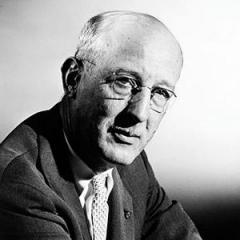
Bruce Catton
Bruce Catton

Bruce Catton was an American historian renowned for his works on the American Civil War. His writing style, marked by clarity and narrative power, made complex historical events understandable to a broad audience. Catton was awarded the Pulitzer Prize for History in 1953 for his book 'The Civil War: A Narrative'. more

You May Also Like

“the long roll called William Wofford’s Georgia brigade to fall in for duty. Orders were issued to fill haversacks with snowballs and form line of battle, and behind its color guards the brigade marched two miles to the camp of Joseph Kershaw’s South Carolina brigade. “We were in line of battle on a hill and Kershaw’s formed and come out to fight us,” Georgian Jim Mobley wrote his brother. “The field officers was on their horses and when they come against us, they come with a hollar! and, Benjamin, Great God, I never saw snow balls fly so in my life.” The order to open fire was given at 100 feet. Charge and countercharge were spirited by the Rebel yell. Combat was hand-to-hand, prisoners were taken. “I tell you it beat anything . . . ,” Mobley exclaimed. “There was 4000 men engaged on both sides, and you know it was something!”

“At one point they passed a newly abandoned Rebel encampment, and Captain Bowers was surprised to see that it looked just like one of their own. “In every respect it was as good a camp as any we have had. . . .” (Rummaging through this campsite, men of the 2nd Maine came upon a packet of photographs of Federal soldiers. Someone recognized a name on one of them as a man in their brigade, and before long Sergeant Walter Carter, 22nd Massachusetts, was handed the pictures he had lost on the Fredericksburg battlefield five months earlier. And scavengers in the 83rd Pennsylvania recovered some of the fancy French knapsacks they had lost at Gaines’s Mill the previous June.)”

“Confederates in Jackson’s column reported seeing a Yankee balloon—it was the Eagle—and assumed that if they could see it, it could see them. Yet such were conditions aloft that not a single report reached General Hooker that day from the aeronautical corps that an enemy column was marching to the south and west of Chancellorsville.”

“Maj. Gen. A. P. Hill’s division, which had remained behind at Harpers Ferry to oversee the surrender, was marching hard to reach the battlefield. The only question was whether Hill’s “Light Division” would arrive in time to save the Army of Northern Virginia.6”

“It was a saying in the army that all a Yankee was worth was his shoes, and after Fredericksburg the story went round how a Confederate soldier stopped to pull off the boots of a Union officer supposed to be dead. Suddenly, in the midst of pulling off the first boot, the 'corpse' weakly raised phis head and cursed the rebel for robbing the wounded. 'Beg pardon, sir,' replied the Confederate as he nonchalantly walked away, 'I thought you had gone above.”

“The word began to filter down the lines, and the grumbling stopped, there was something new about this march, something these men had never been a part of before. If the fight in the Wilderness had not gone their way—the most optimistic called it a draw—they were not doing what this army had always done before, they were not going back above the river. If they had never said much about Grant, had never thought him any different from the ones who had come before, if they had become so used to the steady parade of failure, this time there was a difference. Some wanted to cheer, but were hushed by nervous officers. So along the dusty roads hats went up and muskets were held high, a silent salute to this new commander. This time, they were marching south.”

“Richmond serves one purpose. Lee must defend it. If we threaten the city, he will have to confront us. Lee will soon learn … we are not going away. If the newspapers and all those people in Washington must hear that, fine, I will write it down, send a letter to Stanton. You can deliver it yourself, read it to him, to all of them, make them understand what we are going to do. If it takes all summer … if it takes all year … it is only a matter of time before General Lee must face the consequences.”