“Every man's affairs, however little, are important to himself.”
Quote by Samuel Johnson
Work
The life of Samuel Johnson, LL. D., comprehending an account of his studies, and numerous works, in chronological order: a series of his epistolary correspondence and conversations with many eminent persons; and various original pieces of his composition, never before published; the whole exhibiting a view of literature and literary men in Great Britain, for near half a century during which he flourished
This book offers a chronological account of Samuel Johnson's life, highlighting his studies, numerous literary works, and his extensive correspondence and conversations with prominent figures of his time. It provides insight into the literary scene in Great Britain over nearly half a century, showcasing Johnson's influence on literature and his interactions with other notable literary men. more
Author
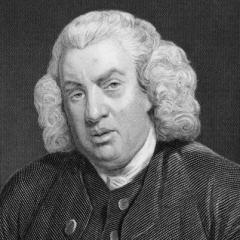
Samuel Johnson
Samuel Johnson was an English writer, poet, and lexicographer, renowned for his comprehensive English dictionary, 'A Dictionary of the English Language', published in 1755. His distinctive writing style and wit have cemented his place as a significant figure in the history of English literature. more
You May Also Like
“Apologies are seldom of any use.”
Source: The Letters of Samuel Johnson, Volume I: 1731-1772
“It very seldom happens to a man that his business is his pleasure.”
Source: The beauties of Johnson: choice selections from his works
“I have always considered a clergyman as the father of a larger family than he is able to maintain.”
Source: The Table Talk of Dr. Johnson: Comprising Opinions and Anecdotes of Life and Literature, Men, Manners, and Morals
Source: The life of Samuel Johnson, LL. D., comprehending an account of his studies, and numerous works, in chronological order: a series of his epistolary correspondence and conversations with many eminent persons; and various original pieces of his composition, never before published; the whole exhibiting a view of literature and literary men in Great Britain, for near half a century during which he flourished
Source: The life of Samuel Johnson, LL. D., comprehending an account of his studies, and numerous works, in chronological order: a series of his epistolary correspondence and conversations with many eminent persons; and various original pieces of his composition, never before published; the whole exhibiting a view of literature and literary men in Great Britain, for near half a century during which he flourished
“I live in the crowd of jollity, not so much to enjoy company as to shun myself.”
Source: Essay on the life and genius of Dr. Johnson [by Arthur Murphy] Poems. Rasselas, prince of Abissinia. Letters
“Every man wishes to be wise, and they who cannot be wise are almost always cunning.”
Source: Boswell's Life of Johnson: Including Boswell's Journal of a Tour of the Hebrides, and Johnson's Diary of A Journey Into North Wales
Source: The life of Samuel Johnson, LL. D., comprehending an account of his studies, and numerous works, in chronological order: a series of his epistolary correspondence and conversations with many eminent persons; and various original pieces of his composition, never before published; the whole exhibiting a view of literature and literary men in Great Britain, for near half a century during which he flourished