Quotessence
Home / Quotes / Quote by Max Stirner

Quote by Max Stirner

Work

Stirner: The Ego and Its Own

This book is a seminal work in the field of individualist anarchism, advocating for the primacy of the individual over societal norms and institutions. It delves into the concept of the ego as the central driving force of human action and thought. more

Author
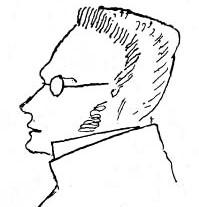
Max Stirner
Max Stirner

Max Stirner was a German philosopher born on October 25, 1806, and died on June 26, 1856. His philosophical thoughts revolve around individualism and egoism, which had a profound impact on later existentialism and nihilism. more

You May Also Like

“When every one is to cultivate himself into man, condemning a man to machine-like labor amounts to the same thing as slavery. If a factory-worker must tire himself to death twelve hours and more, he is cut off from becoming man. Every labor is to have the intent that the man be satisfied.... His labor is nothing taken by itself, has no object in itself, is nothing complete in itself; he labors only into another's hands, and is used (exploited) by this other.”

“I say: liberate yourself as far as you can, and you have done your part; for it is not given to every one to break through all limits, or, more expressively, not to everyone is that a limit which is a limit for the rest. Consequently, do not tire yourself with toiling at the limits of others; enough if you tear down yours. He who overturns one of his limits may have shown others the way and the means; the overturning of their limits remains their affair.”

“The difficulty in our education up till now lies, for the most part, in the fact that knowledge did not refine itself into will, to application of itself, to pure practice. The realists felt the need and supplied it, though in a most miserable way, by cultivating idea-less and fettered "practical men." Most college students are living examples of this sad turn of events. Trained in the most excellent manner, they go on training; drilled they continue drilling.”

“Feuerbach ... recognizes ... "even love, in itself the truest, most inward sentiment, becomes an obscure, illusory one through religiousness, since religious love loves man only for God's sake, therefore loves man only apparently, but in truth God only." Is this different with moral love? Does it love the man, this man for this man's sake, or for morality's sake, for Man's sake, and so-for homo homini Deus-for God's sake?”