“Nothing is so convenient as a decisive argument ... which must at least silence the most arrogant bigotry and superstition, and free us from their impertinent solicitations. I flatter myself, that I have discovered an argument ... which, if just, will, with the wise and learned, be an everlasting check to all kinds of superstitious delusion, and consequently, will be useful as long as the world endures. For so long, I presume, will the accounts of miracles and prodigies be found in all history, sacred and profane.”
Quote by David Hume
Work
An Enquiry Concerning Human Understanding; [with] A Letter from a Gentleman to His Friend in Edinburgh; [and] An Abstract of a Treatise of Human Nature
This book is a comprehensive examination of the fundamental principles of human knowledge, perception, and reason. It includes a letter discussing philosophical ideas and an abstract summarizing a broader treatise on human nature. more
Author
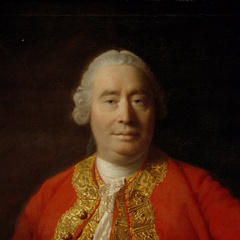
David Hume
David Hume, born on May 7, 1711, in Edinburgh, Scotland, and died on August 25, 1776, was an outstanding philosopher, historian, and economist. Known for his contributions to empiricism and skepticism, his works have had a profound impact on subsequent philosophy, economics, and psychology. more
You May Also Like
Source: Essays and Treatises on several subjects, etc. New edition
Source: The collected works of Aldous Huxley
Source: The Major Prose of Thomas Henry Huxley
Source: Life and Letters of Thomas Henry Huxley
Source: Lectures and Essays
“Once you win the Cup once, you feel like it's yours. You don't want to give it up.”
“I think maybe our team was too young and stupid to even know what was going on.”