Quotessence
Home / Quotes / Quote by Raoul Vaneigem

Quote by Raoul Vaneigem

Work

Situationism: A Compendium

This book serves as a comprehensive reference to the theories and practices of the Situationist movement, which emerged in the 1950s and 1960s. It includes essays, manifestos, and other texts that explore the movement's critique of modern society and its advocacy for a new form of living that emphasizes the importance of the social context of everyday life. more

Author
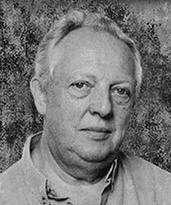
Raoul Vaneigem
Raoul Vaneigem

Raoul Vaneigem is a Belgian writer known for his critical analysis of consumerism and modern life. His work primarily focuses on issues of personal freedom, social change, and the essence of human existence. more

You May Also Like

“The most important part about tomorrow is not the technology or the automation, but that man is going to come into entirely new relationships with his fellow men. He will retain much more in his everyday life of what we term the naïveté and idealism of the child. I think the way to see what tomorrow is going to look like is just to look at our children.”

“The process of schooling does not give birth to human beings - as education should but never will so long as it springs from the collective consciousness of our culture - but instead it teaches us to value abstract rewards at the expense of our autonomy, curiosity, interior lives, and time.”

“At still higher doses psilocybin triggers this activity in the language-forming capacity of the brain that manifests as song and vision. Psilocybin may have synergized the emergence of higher forms of psychic organization out of primitive protohuman animals. It can be seen as a kind of evolutionary enzyme, or evolutionary catalyst.”

“When you buy a used car, you kick the tires, you look at the odometer, you open up the hood. If you do not feel yourself an expert in automobile engines, you bring a friend who is. And you do this with something as unimportant as an automobile. But on the issues of the transcendent, of ethics, of morals, of the origins of the world, of the nature of human beings, on those issues should we not insist upon at least equally skeptical scrutiny?”