Quotessence
Home / Quotes / Quote by Lynette Yiadom-Boakye

Quote by Lynette Yiadom-Boakye

“When people ask about the aspect of race in the work, they are looking for very simple or easy answers. Part of it is when you think other people are so different than yourself, you imagine that their thoughts aren't the same. When I think about thought, I think about how much there is that is common.”

Quote by Lynette Yiadom-Boakye

Author
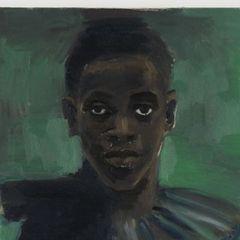
Lynette Yiadom-Boakye

Lynette Yiadom-Boakye is a British painter known for her portraits of black individuals. Her work is characterized by simple lines and vivid colors, exploring themes of race, identity, and memory. more

You May Also Like

“It's nice for me to have a ballet as a kind of platform for creativity, because unlike modern dance or contemporary dance or downtown dance, ballet is formalized, and there's something orthodox about it that I like. I like that there's less emphasis on subversion and innovation. I actually think that my musical vernacular or my musical voice is also less inclined toward innovation and subversion. I think I'm a traditionalist.”

“The timelessness is completely important. It's partly about removing things that would become in some way nostalgic. There aren't really any markers of time, like furniture or a particular style of shoe that denote a particular period or place. I think that's why I like the outdoors, because it removes a sense of time and I want the painting to feel timeless, because it increases that sense of omnipotence.”

“It's hard to pin down what the politics would be, in a way. For me the politics are very visual and felt, thought, seen, but not necessarily put into words. The confusions and conditions within the work are the politics. The fact that a lot of the time the first thing people want to talk to me about is the racial angle, which is a part of the work and I am happy to talk about it, but it's not necessarily the first thing on my mind when I am making something.”

“Painting from life was incredibly important for me because it allowed me to train my eyes to see everything that is there. But I realized early on that painting from life wasn't something that I was all that invested in. I was always more interested in the painting than I was the people. For me, removing that as a compulsion offered me a lot more freedom to actually paint and think about color, form, movement, and light.”