Quotessence
Home / Quotes / Quote by Edmund Campion

Quote by Edmund Campion

“We human beings are story-tellers, we pass on our values through the stories we tell. This is particularly true of Catholics, who get their identity through their histories, which they see as salvation history linking them to the saving actions of Christ. So, for Catholics, doing history – passing on the values by telling stories – is a pastoral imperative. We must look where we have been in order to know where we are going.”

Quote by Edmund Campion

Work

Australian Catholic Lives

Browse quotes and source details for this work. more

Author
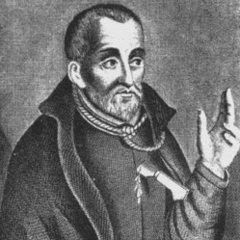
Edmund Campion
Edmund Campion

Edmund Campion was an English priest and scholar who became a Catholic martyr. Born on January 24, 1540, he was educated at St. John's College, Cambridge, and later became a professor of Greek. Campion's dedication to the Catholic faith led him to become a Jesuit priest, despite the risks involved. He was arrested in 1580 and executed for his faith on December 1, 1581. His courage and steadfastness in the face of persecution have made him a revered figure in the Catholic Church. more

You May Also Like

“I’ll tell you something else about which I’ve been lately thinking!” he bellowed in a suddenly stentorian voice. “I've been thinking about our beautiful country! Who gave it to us? I’ve been thinking about how God the Almighty gave us this beautiful sprawling land as a reward for how wonderful we are. We’re big, we’re energetic, we’re generous, which is reflected in all our myths, which are so very populated with large high-energy folks who give away all they have! If we have a National Virtue, it is that we are generous, if we have a National Defect, it is that we are too generous! Is it our fault that these little jerks have such a small crappy land? I think not! God Almighty gave them that small crappy land for reasons of His own. It is not my place to start cross-examining God Almighty, asking why He gave them such a small crappy land, my place is to simply enjoy and protect the big bountiful land God Almighty gave us!” Suddenly Phil didn’t seem like quite so much of a nobody to the other Outer Hornerites. What kind of nobody was so vehement, and used so many confusing phrases with so much certainty, and was so completely accurate about how wonderful and generous and underappreciated they were?”

“А я вважаю, що справжній чоловік народжується воїном. — Дурня! — заперечив я. — Не воїном, а людиною. Істотою, що мислить і відчуває. Яка так, як і жінка, має право боятися смерті, болю і приниження. І навпаки: пора б уже виростити чоловіків, які бояться убивати, робити комусь боляче і принижувати когось. Чоловік має право бути пацифістом, ненавидіти війну, не хапатися за зброю, берегти себе і уникати вбивства інших людей в ім'я яких би там не було цілей, крім крайніх випадків, коли треба і доводиться навіть ціною свого життя захищати свою родину від бандитів, від зовнішніх ворогів і від своєї держави, яка буває гірша за зовнішніх ворогів. Але якийсь перший-ліпший авантюрист, кочівник по гарячих точках чи просто слухняний виконавець, готовий убивати чи хоч бути убитим за наказом, за шматок якоїсь території, за високу ідею, за те, щоб примусити когось жити по-нашому, за гроші, за ордени чи заради свого задоволення, якої б статі він не був, він для мене взагалі не зовсім людина [102].”

“I have argued that when we encounter other humans we experience them first as persons, and cannot help but do so. This means that in order to see a human person as an animal or organism we must abstract from the totality of our experience. My suggestion is that we take this fact seriously in understanding the ontology of everyday objects. According to this proposal a “human animal” or “human organism” is not a thing in its own right, but rather a particular perspective we take on ourselves and our lives, one that attends only to our purely biological functions.”