Quotessence
Home / Quotes / Quote by Walter Benjamin

Quote by Walter Benjamin

“The realization of dream elements, in the course of waking up, is the paradigm of dialectical thinking. Thus, dialectical thinking is the organ of historical awakening. Every epoch, in fact, not only dreams the one to follow but in dreaming, precipitates its awakening. "It bears its end within itself and unfolds it-as Hegel already noticed-by cunning. With the destabilizing of the market economy, we begin to recognize the monuments of the bourgeoisie as ruins even before they have crumbled.”

Quote by Walter Benjamin

Work

The Arcades Project

Friedrich Nietzsche's unfinished project explores the relationship between modern architecture and the human psyche, drawing on a wide range of historical and philosophical sources. more

Author

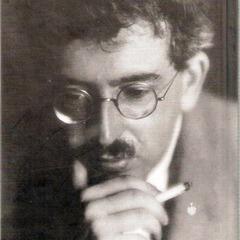
Walter Benjamin
Walter Benjamin

Walter Benjamin, born on July 15, 1892, and died on September 26, 1940, was a prominent German literary critic whose works profoundly influenced 20th-century literary criticism and cultural theory. more

You May Also Like

“It is therefore of supreme importance that we consent to live not for ourselves but for others. When we do this we will be able first of all to face and accept our own limitations. As long as we secretly adore ourselves, our own deficiencies will remain to torture us with an apparent defilement. But if we live for others, we will gradually discover that no expects us to be 'as gods'. We will see that we are human, like everyone else, that we all have weaknesses and deficiencies, and that these limitations of ours play a most important part in all our lives. It is because of them that we need others and others need us. We are not all weak in the same spots, and so we supplement and complete one another, each one making up in himself for the lack in another.”

“I've often thought that if I hadn't got what I wanted things might have been different with me. I might have found something in my mind and enjoyed putting it in circulation. I might have been content with the work of it, and had some sweet vanity out of the success. I suppose that at one time I could have had anything I wanted, within reason, but that was the only thing that I wanted with any fervour. God! And that taught me you can't have anything, you can't have anything at all. Because desire just cheats you. It's like a sunbeam skipping here and there about the room. It stops and gilds some inconsequential object, and we poor fools try to grasp it - but when we do the sunbeam moves on to something else, and you've got the inconsequential part, but the glitter that made you want it is gone-”