Quotessence
Home / Quotes / Quote by Robert Breault

Quote by Robert Breault

“Now and then it's good to list all the things you regularly do for which there was once a good reason.”

Quote by Robert Breault

Author
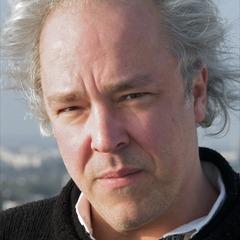
Robert Breault
Robert Breault

Robert Breault (born 1963) is an American tenor known for his performances in opera, oratorio, and art song. With a warm, lyrical voice, he excels in works by Mozart, Puccini, and Verdi. Breault has performed at leading opera houses worldwide and collaborated with renowned conductors and orchestras. He is also a dedicated educator, serving as a voice professor at the University of Utah. His recordings include several albums of classical and contemporary repertoire, earning critical acclaim. more

You May Also Like

“For ages, a deadly conflict has been waged between a few brave men and women of thought and genius upon the one side, and the great ignorant religious mass on the other. This is the war between Science and Faith. The few have appealed to reason, to honor, to law, to freedom, to the known, and to happiness here in this world. The many have appealed to prejudice, to fear, to miracle, to slavery, to the unknown, and to misery hereafter. The few have said "Think" The many have said "Believe!"”

“As words are not the things we speak about, and structure is the only link between them, structure becomes the only content of knowledge. If we gamble on verbal structures that have no observable empirical structures, such gambling can never give us any structural information about the world. Therefore such verbal structures are structurally obsolete, and if we believe in them, they induce delusions or other semantic disturbances.”

“If we, who live outside asylums, act as if we lived in a fictitious world- that is to say, if we are consistent with our beliefs- we cannot adjust ourselves to actual conditions, and so fall into many avoidable semantic difficulties. But the so-called normal person practically never abides by his beliefs, and when his beliefs are building for him a fictitious world, he saves his neck by not abiding by them. A so-called "insane" person acts upon his beliefs, and so cannot adjust himself to a world which is quite different from his fancy.”

“The point is that we are all capable of believing things which we know to be untrue, and then, when we are finally proved wrong, impudently twisting the facts so as to show that we were right. Intellectually, it is possible to carry on this process for an indefinite time: the only check on it is that sooner or later a false belief bumps up against solid reality, usually on a battlefield.”

“Belief Systems contradict both science and ordinary "common sense." B.S. contradicts science, because it claims certitude and science can never achieve certitude: it can only say, "This model"- or theory, or interpretation of the data- "fits more of the facts known at this date than any rival model." We can never know if the model will fit the facts that might come to light in the next millennium or even in the next week.”

“Death makes me realize how deeply I have internalized the agnosticism I preach in all my books. I consider dogmatic belief and dogmatic denial very childish forms of conceit in a world of infinitely whirling complexity. None of us can see enough from one corner of space-time to know "all" about the rest of space-time.”

“The Principle of Tolerance, fixed once for all the realization that all knowledge is limited. It is an irony of history that at the very time when this was being worked out, there should rise, under Hitler in Germany and other tyrants elsewhere, a counter-conception: a principle of monstrous certainty. When the future looks back on the 1930's, it will think of them as a crucial confrontation of culture as I have been expounding it - the ascent of man against the throwback to the despots' belief that they have absolute certainty.”