“Hang those that talk of fear.”
Quote by William Shakespeare
Work
The plays of William Shakspeare, with the corrections and illustr. of various commentators, to which are added notes by S. Johnson and G. Steevens, revised and augmented by I. Reed, with a glossarial index
This book is a scholarly compilation of Shakespeare's works, including his renowned plays. It is distinguished by the inclusion of corrections and annotations from a range of commentators. The volume also incorporates notes by two notable scholars, Samuel Johnson and George Steevens, and has been revised and augmented by Isaac Reed. The book concludes with a glossarial index for easy reference. more
Author
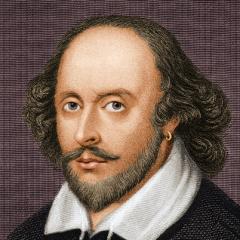
William Shakespeare
William Shakespeare (1564 - April 23, 1616) was one of the greatest poets of the English Renaissance, renowned for his dramatic works. His plays spanned a variety of genres, including tragedy, comedy, and history, and have had a profound impact on literature worldwide. more
You May Also Like
“Nothing routs us but the villainy of our fears.”
Source: The Shakespearian Dictionary, Forming a General Index to All the Popular Expressions, and Most Striking Passages in the Works of Shakespeare, from a Few Words to Fifty Or More Lines ... By T. Dolby
Source: The Wars of the Roses In Plain and Simple English: Includes Henry VI Parts 1 - 3 & Richard III, Richard II, Henry IV Parts 1 and 2, and Henry V
Source: Romeo and Juliet
Source: Henry VI
“No visor does become black villainy so well as soft and tender flattery.”
Source: Romeo and Juliet. Comedy of errors. Titus Andronicus. Pericles
“Oh, flatter me; for love delights in praises.”
Source: The plays and poems of William Shakspeare
Source: The plays and poems of William Shakspeare