Quotessence
Home / Quotes / Quote by William Julius Wilson

Quote by William Julius Wilson

“If you're going to compare a middle-income black kid with a middle- income white kid, and, say, you control for family background, family education, and family income, and if this middle-income black kid doesn't score as well as the white kid on the test, then I say, look, you haven't taken into consideration the cumulative effect of living in a segregated neighborhood and going to a de facto segregated school. You're denying a position at Harvard or some other place to a kid that really could make it. That's why I support affirmative action that's based on both class and race.”

Quote by William Julius Wilson

Author
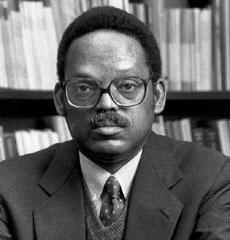
William Julius Wilson

William Julius Wilson is an American sociologist renowned for his research on urban poverty and racial issues. His works, 'The Truly Disadvantaged' and 'When Work Disappears', have had a profound impact on understanding social inequality and racial segregation in American cities. more

You May Also Like

“Over the years, black leaders have been slow to recognize the need for a very, very progressive agenda. Anytime someone has talked about putting America back to work, blacks should have said yes, but they didn't. They were so preoccupied with affirmative action that they didn't provide the kind of leadership that would help some of the other progressive folks. Only now are black leaders beginning to realize the impact of economic issues.”

“I think it is difficult to achieve a meaningful political coalition if you have race-based programs that divide members of the coalition. The problem I have, however, is that white people assume an either/or position: Either we have race-based programs or we don't. What I see is comprehensive social reform that includes race-based and race-neutral programs.”

“If we could create the conditions that make racism difficult, or discourage it, then there would be less stress and less need for affirmative action programs. One of those conditions would be an economic policy that would create tight labor markets over long periods of time. Now does that mean that affirmative action is here only temporarily? I think the ultimate goal should be to remove it.”

“I don't know if you've been in any inner-city schools, but it's pretty demoralizing. The kids come to class bright-eyed, enthusiastic - entering first grade really looking forward to school. By the fourth grade they're just completely turned off, and by the time they enter high school, they see little relationship between school and employment. It's bad enough you have incompetent teachers and schools that are poorly run, understaffed, and lack material resources. It's even worse when the kids themselves don't feel they have any stake in school.”

“Unemployment is higher in Europe than in the United States and primarily concentrated in immigrant minority populations, so people are worried about what's going to happen and if American-style ghettos are emerging in Europe. There are some of the problems there that America sees associated with the lack of economic inclusion - family breakdown, gang behavior, and racial tensions. I get the sense that in Europe they are much more concerned about these issues than in the United States.”

“I was reading through all these NSA programs that Snowden has revealed, and one of the ones that fascinated me was that smart TVs can be used to look at you in your room. That is totally like the telescreen from 1984. It's not sort of like it, it's not a lot like it, it is it. And the ability of the NSA to turn on your cell phone, even if it's powered down, and listen to you in your home - that's insane to me. People had been warning that 1984 was just around the corner. Well, it has arrived, and Snowden has proven that.”

“What people don't seem to ever understand is that any infrastructure that exists under your regime, in your current government, will be appropriated and inherited by the next regime. I mean, the KGB came out of the NKVD which came out of the Tsarist version of the same thing. And now, the FSB operates out of the old KGB building in Moscow. The infrastructure remains exactly the same. There's a little bit of reshuffling of personnel, and that's it. The way to make sure that there's no FSB today would have been for the Tsar to not have built an infrastructure for it in the 1800s.”