“The time will come to every human being when it must be known how well he can bear to die.”
Quote by Samuel Johnson
Work
The Works of Sir Thomas Browne: Preface. Dr. Johnson's Life of Sir Thomas Browne. Supplementary memoir by the editor. Mrs. Lyttleton's communication to Bishop Kennet. Pseudodoxia epidemica, books I-IV
The Works of Sir Thomas Browne is a comprehensive compilation that brings together various writings by the 17th-century English physician and philosopher. It includes the preface to Browne's works, a biography by Dr. Samuel Johnson, a supplementary memoir by the editor, and a letter from Mrs. Lyttleton to Bishop Kennet. The collection also encompasses the first four books of Pseudodoxia epidemica, a treatise on popular errors and misconceptions, showcasing Browne's intellectual pursuits and scholarly contributions. more
Author
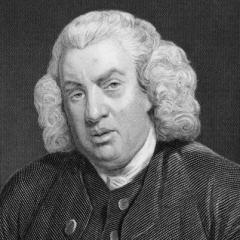
Samuel Johnson
Samuel Johnson was an English writer, poet, and lexicographer, renowned for his comprehensive English dictionary, 'A Dictionary of the English Language', published in 1755. His distinctive writing style and wit have cemented his place as a significant figure in the history of English literature. more
You May Also Like
“The uncertainty of death is, in effect, the great support of the whole system of life.”
Source: The Wisdom of the Rambler, Adventurer, and Idler
Source: Life of Johnson: Including Boswell's Journal of a Tour to the Hebrides and Johnson's Diary of a Journey Into North Wales
Source: The Works of Samuel Johnson, LL.D.: With An Essay on His Life and Genius
Source: The Adventurer
Source: The Rambler: In Four Volumes
Source: The beauties of Johnson: choice selections from his works