Quotessence
Home / Quotes / Quote by Jorge Luis Borges

Quote by Jorge Luis Borges

Work

A Personal Anthology

This book is a curated selection of personal narratives, each offering a unique perspective on the author's life experiences, thoughts, and emotions. more
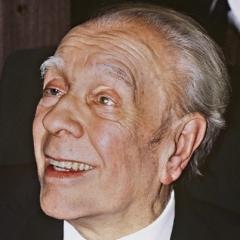
Author

Jorge Luis Borges
Jorge Luis Borges

Jorge Luis Borges was an Argentine writer, poet, and literary critic. His works are known for their unique fantasy and philosophical thinking, which have had a profound impact on 20th-century literature. more

You May Also Like

“We arrive at 69th Street, turn the corner, and walk toward the entrance to the Hunter auditorium. The doors are open. Inside, two or three hundred Jews sit listening to the testimonials that commemorate their unspeakable history. These testimonials are the glue that binds. They remind and persuade. They heal and connect. Let people make sense of themselves. ... 'Come inside,' she says softly to me, thinking to do me a good turn. 'Come, you'll feel better.' I shake my head no. 'Being Jewish can't help me anymore,' I tell her.”

“To illustrate this claim, Benjamin relates a fable about a father who taught his sons the merits of hard work by fooling them into thinking that there was buried treasure in the vineyard by the house. The turning of soil in the vain search for gold results in the discovery of a real treasure: a wonderful crop of fruit. With the war came the severing of ‘the red thread of experience’ which had connected previous generations, as Benjamin puts it in ‘Sketched into Mobile Dust’. The ‘fragile human body’ that emerged from the trenches was mute, unable to narrate the ‘forcefield of destructive torrents and explosions’ that had engulfed it. Communicability was unsettled. It was as if the good and bountiful soil of the fable had become the sticky and destructive mud of the trenches, which would bear no fruit but only moulder as a graveyard. ‘Where do you hear words from the dying that last and that pass from one generation to the next like a precious ring?’ Benjamin asks.”

“She told me as I sat frightened like a mouse, just like you, 'A woman's body follows the moon. It is not still and hard like a man's. Her happiness and sadness take many forms; each day the brightness of her light and the mysterious depths of her shadows may change. A woman is close to the earth yet near to the heavens. She grows like the harvest; she becomes ripe like fruit. When, after many children, my son looks at you and asks where is the beauty of your youth, tell him these words. The body of your youth stays with your youth, and the body of the harvest, that is the body of your later years. Look at nature, how she dresses herself for every season. In the summer, she adorns herself as fields of rose and pink blooms, with fruits of peach, mango, and lemon, and as the season cools, she, too, dresses in darker hues of brown, maroon, and gold, and in the rains she is all gray mist and stormy blues. A woman must always be proud and look after herself.' Those are principles we follow forever, even us old ones.”