“Poets claim that we recapture for a moment the self that we were long ago when we enter some house or garden in which we used to live in our youth. But these are most hazardous pilgrimages, which end as often in disappointment as in success. It is in ourselves that we should rather seek to find those fixed places, contemporaneous with different years. And great fatigue followed by a good night's rest can to a certain extent help us to do so. For in order to make us descend into the most subterranean galleries of sleep, where no reflexion from overnight, no gleam of memory comes to light up the interior monologue—if the latter does not itself cease—fatigue followed by rest will so thoroughly turn over the soil and penetrate the bedrock of our bodies that we discover down there, where our muscles plunge and twist in their ramifications and breathe in new life, the garden where we played in our childhood. There is no need to travel in order to see it again; we must dig down inwardly to discover it. What once covered the earth is no longer above but beneath it; a mere excursion does not suffice for a visit to the dead city: excavation is necessary also. But we shall see how certain fugitive and fortuitous impressions carry us back even more effectively to the past, with a more delicate precision, with a more light-winged, more immaterial, more headlong, more unerring, more immortal flight, than these organic dislocations.”
Quote by Marcel Proust
Book:The Guermantes Way
Work
The Guermantes Way
The Guermantes Way is a part of a larger literary work that delves into the lives of the Guermantes family and their interactions with the broader society. The narrative is characterized by its intricate character development and philosophical musings, reflecting the author's deep insight into the human condition. more
Author
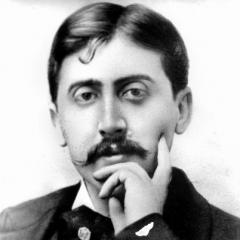
Marcel Proust
Marcel Proust was a French novelist renowned for his magnum opus, 'In Search of Lost Time'. This novel is considered a classic of 20th-century literature, known for its intricate psychological portrayals and profound exploration of memory. more
You May Also Like
Source: A Gate at the Stairs
Source: Dandelion Wine
Source: In Search of Lost Time, Vol. 3: Sodom and Gomorrah & The Captive
Source: קיצור תולדות האנושות
Source: Who Has Known Heights
“You never know how many details we neglect until we read another's remembrance.”