“What bitter anguish would not the people of Athens have often escaped if their government had contained so provident a safeguard against tyranny of their own passions? Popular liberty might then have escaped the indelible reproach of decreeing to the same citizens the hemlock on one day and statutes the next.”
Quote by Alexander Hamilton
Work
The Fœderalist: A Collection of Essays, Written in Favor of the New Constitution, as Agreed Upon by the Fœderal Convention, September 17, 1787. Reprinted from the Original Text. With an Historical Introduction and Notes
This book is a collection of essays that were published in 1788 to support the newly adopted United States Constitution. The essays were written by Alexander Hamilton, James Madison, and John Jay. This reprinted edition includes an historical introduction and additional notes to provide context and explanation. more
Author
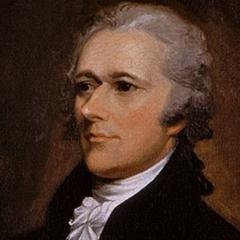
Alexander Hamilton
Alexander Hamilton was a Founding Father of the United States, born on January 11, 1757, and died on July 12, 1804. He played a crucial role in the American Revolutionary War and was instrumental in the drafting of the U.S. Constitution. As the first Secretary of the Treasury, Hamilton promoted fiscal stability and economic growth, establishing the First Bank of the United States and proposing solutions for federal debt. His ideas and policies had a profound impact on the early political and economic development of the United States. more
You May Also Like
Source: The Federalist Papers and the Constitution of the United States: The Principles of the American Government
Source: The Federalist, on the New Constitution, Written in the Year 1788
Source: The Federalist, on the New Constitution, Written in the Year 1788
Source: The Federalist, on the New Constitution: Written in 1788
Source: The Federalist: With Letters of Brutus
Source: The Federalist, on the New Constitution, Written in the Year 1788