Quotessence
Home / Quotes / Quote by Colin Wilson

Quote by Colin Wilson

“In 1530 [H. C. Agrippa] published at Antwerp a book, On the Vanity of Sciences and Arts, a curious, nihilistic work, whose central thesis is that knowledge only brings man to disillusionment and recognition of how little he knows. It reads like an anticipation of Faust’s speech in Act I of Goethe’s play. The only worthwhile study, says Agrippa, is theology and scripture. He was undoubtedly sincere.”

Quote by Colin Wilson

Work

The Occult

Browse quotes and source details for this work. more

Author

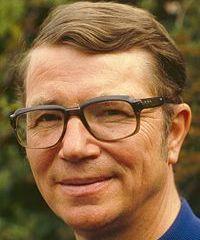
Colin Wilson
Colin Wilson

Colin Wilson, a British writer born on June 26, 1931, and died on December 5, 2013. His works spanned across various disciplines including philosophy, psychology, criminology, and literary criticism. He is known for his unique perspective and in-depth analysis. more

You May Also Like

“The people were divided into the persecuted and those who persecuted them. That wile beast, which lives in man and does not dare to show itself until the barriers of law and custom have been removed, was now set free. The signal was given, the barriers were down. As has so often happened in the history of man, permission was tacitly granted for acts of violence and plunder, even for murder, if they were carried out in the name of higher interests, according to established rules, and against a limited number of men of a particular type and belief....In a few minutes the business quarter, based on centuries of tradition, was wiped out. It is true that there had always been concealed enmities and jealousies and religious intolerance, coarseness and cruelty, but there had also been courage and fellowship and a feeling for measure and order, which restrained all these instincts within the limits of the supportable and, in the end, calmed them down and submitted them to the general interest of life in common. Men who had been leaders in the commercial quarter for forty years vanished overnight as if they had all died suddenly, together with the habits, customs and institutions which they represented. p. 11”

“The people were divided into the persecuted and those who persecuted them. That wild beast, which lives in man and does not dare to show itself until the barriers of law and custom have been removed, was now set free. The signal was given, the barriers were down. As has so often happened in the history of man, permission was tacitly granted for acts of violence and plunder, even for murder, if they were carried out in the name of higher interests, according to established rules, and against a limited number of men of a particular type and belief....In a few minutes the business quarter, based on centuries of tradition, was wiped out. It is true that there had always been concealed enmities and jealousies and religious intolerance, coarseness and cruelty, but there had also been courage and fellowship and a feeling for measure and order, which restrained all these instincts within the limits of the supportable and, in the end, calmed them down and submitted them to the general interest of life in common. Men who had been leaders in the commercial quarter for forty years vanished overnight as if they had all died suddenly, together with the habits, customs and institutions which they represented. p. 11”