“But they have two other Rights; those of sitting when they please, and as long as they please, in which methinks they have the advantage of your Parliament; for they cannot be dissolved by the Breath of a Minister, or sent packing as you were the other day, when it was your earnest desire to have remained longer together.”
Quote by Benjamin Franklin
Work
Memoirs of the life and writings of Benjamin Franklin ...
This book offers an intimate look into the life and thoughts of Benjamin Franklin, covering his diverse achievements in science, politics, and literature. It includes his personal correspondence, scientific experiments, and political writings, providing a rich tapestry of his intellectual journey and contributions to society. more
Author
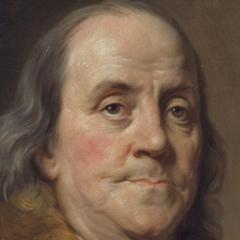
Benjamin Franklin
Benjamin Franklin was a prominent figure in American history, serving as one of the Founding Fathers of the United States. He was a statesman, scientist, inventor, and writer, born on January 17, 1706, and died on April 17, 1790. Franklin is renowned for his contributions to electricity, his support for the American colonial independence movement, and his successful diplomatic efforts in France. more
You May Also Like
Source: The Writings of James Madison: 1787-1790
Source: The Federalist, on the New Constitution, Written in the Year 1788
Source: The Federalist Papers: A Collection of Essays Written in Favour of the New Constitution
Source: The Federalist Papers: A Collection of Essays Written in Favour of the New Constitution
Source: The Essential Federalist: A New Reading of the Federalist Papers
Source: Leonard Cohen on Leonard Cohen