“The consciousness of a general idea has a certain "unity of the ego" in it, which is identical when it passes from one mind to another. It is, therefore, quite analogous to a person, and indeed, a person is only a particular kind of general idea.”
Quote by Charles Sanders Peirce
Work
Peirce on Signs: Writings on Semiotic
'Peirce on Signs: Writings on Semiotic' is a comprehensive compilation of the writings of Charles Sanders Peirce, a prominent American philosopher, logician, and scientist. The book delves into Peirce's extensive work on semiotics, offering a detailed exploration of his ideas on signs, symbols, and their role in human communication. It includes his seminal essays, lectures, and notes, showcasing his development of the semiotic triangle and his contributions to the field of semiotics. The book is a valuable resource for scholars and students of philosophy, linguistics, and communication studies. more
Author
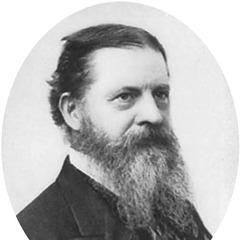
Charles Sanders Peirce
Charles Sanders Peirce was an American philosopher, logician, and scientist, born on September 10, 1839, and died on April 19, 1914. Known as the founder of modern symbolic logic, Peirce's philosophical ideas have had a profound impact on fields such as logic, philosophy of science, and cognitive science. more
You May Also Like
Source: Selected Writings (Values in a Universe of Chance)
“The definition of definition is at bottom just what the maxim of pragmatism expresses.”
“By an object, I mean anything that we can think, i.e. anything we can talk about.”
Source: Writings of Charles S. Peirce: 1857-1866
Source: Collected papers of Charles Sanders Peirce
Source: The Essential Peirce: Selected Philosophical Writings
Source: Selected Writings (Values in a Universe of Chance)
Source: The Essential Peirce: Selected Philosophical Writings