“The enjoyment of power inevitably corrupts the judgment of reason, and perverts its liberty.”
Book:Perpetual Peace
“The enjoyment of power inevitably corrupts the judgment of reason, and perverts its liberty.”
Perpetual Peace is a 1795 work by the German philosopher Immanuel Kant, written in the form of a peace treaty. It outlines a set of preliminary and definitive articles for establishing perpetual peace among states, including the abolition of standing armies, the prohibition of national debt for external conflict, and the requirement that all states have a republican constitution. Kant argues that peace can be secured through a federation of free states and the promotion of cosmopolitan rights, emphasizing the role of reason and moral law in international relations. The essay is a foundational text in political philosophy and international relations theory, influencing later concepts of collective security and global governance. more
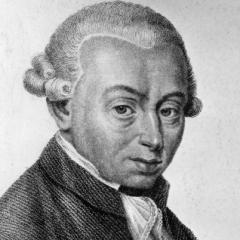
German philosopher, an important representative of the Enlightenment movement, and the founder of the Kantian philosophical system. His thoughts have had a profound impact on the fields of philosophy, ethics, political science, and others. more
“The covetous man is ever in want.”
“Nothing retains less of desire in art, in science, than this will to industry, booty, possession.”
“The avarice person is ever in want; let your desired aim have a fixed limit.”
“Let me tell you, Cassius, you yourself are much condemned to have an itching palm.”
“To hazard much to get much has more of avarice than wisdom.”