Quotessence
Home / Quotes / Quote by Emanuel Swedenborg

Quote by Emanuel Swedenborg

“If we would accept heaven's life, we need by all means to live in the world and to participate in its duties and affairs. In this way, we accept a spiritual life by means of our moral and civic life; and there is no other way a spiritual life can be formed within us, no other way our spirits can be prepared for heaven. This is because living an inner life and not an outer life at the same time is like living in a house that has no foundation, that gradually either settles or develops gaping cracks or totters until it collapses.”

Quote by Emanuel Swedenborg

Work

Heaven and hell

This book delves into the profound and enduring themes of heaven and hell, offering insights into their representation across different belief systems and philosophical thought. It investigates the nature of these concepts, their historical development, and their impact on human understanding of morality, afterlife, and the divine. more

Author

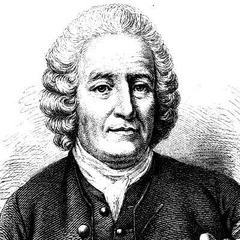
Emanuel Swedenborg
Emanuel Swedenborg

Emanuel Swedenborg was a Swedish scientist, philosopher, and theologian. Born on January 29, 1688, and died on March 29, 1772. The surname 'Swedenborg' is derived from the Swedish word 'borg', meaning 'castle', hence his name can be translated as 'Manuel of the Castle'. Swedenborg made significant contributions to science, particularly in the fields of chemistry, mineralogy, and electricity. His ideas had a profound impact on later science and philosophy. more

You May Also Like

“On Nov. 6, the day before my 94th birthday, our nation will hold one of the most critical elections in my lifetime. We are at a crossroads and there are profound moral issues at stake. I strongly urge you to vote for candidates who support the biblical definition of marriage between a man and a woman, protect the sanctity of life and defend our religious freedoms. The Bible speaks clearly on these crucial issues. Please join me in praying for America, that we will turn our hearts back toward God.”

“The effect of our knowledge rather ought to be, first, to teach us reverence and fear; and, secondly, to induce us, under its guidance and teaching, to ask every good thing from [God], and, when it is received, ascribe it to him. For how can the idea of God enter your mind without instantly giving rise to the thought, that since you are his workmanship, you are bound, by the very law of creation, to submit to his authority?-\-\that your life is due to him?-\-\that whatever you do ought to have reference to him.”