Quotessence
Home / Quotes / Quote by Lester Bangs

Quote by Lester Bangs

Work

Psychotic Reactions and Carburetor Dung: The Work of a Legendary Critic: Rock'N'Roll as Literature and Literature as Rock 'N'Roll

The book delves into the analysis of rock 'n' roll music through the lens of literary criticism, examining how the genre has influenced and been influenced by literature. more

Author
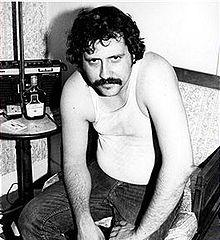
Lester Bangs
Lester Bangs

Lester Bangs was an influential American music journalist known for his unique perspective and insightful commentary. Born on December 13, 1948, and passing away on April 30, 1982, Bangs made a significant impact on the music scene with his work. He wrote for various magazines, including Rolling Stone, Creem, and Village Voice, and his articles were celebrated for their distinctive style and profound analysis of rock music and beyond. more

You May Also Like

“...heavy investments in information technology have delivered disappointing results - largely because companies tend to use technology to mechanize old ways of doing business...Instead of embedding outdated processes in silicon and software, we should obliterate them and start over.”

“To me the biggest waste of time is commuting. First, there is no place that is less than a two-hour commute from New York. You can be half a mile outside of the city limits; you're two hours away by car. I don't care how close they tell you it is. "Oh, it's only thirty miles." Thirty miles? At 8:30 in the morning, thirty miles outside New York, you might as well be starting out in Omaha.”

“For over a half century now I've watched office obesity develop into a full-blown, crippling disease. As our office clutter mounts, we're ever more intimidated and frustrated by it. We engineer drainage and removal of water and liquid wastes from society to prevent hazardous buildup, but the effluent that pours into our offices-paper-is never flushed out.”

“In the first round of work simplification...you can reasonably expect a 30 to 50 percent reduction...To implement the actual simplification, you must question why each step is performed. Typically, you will find that many steps exist in your work flow for no good reason. Often they are there by tradition or because formal procedure ordains it, and nothing practical ordains it.”