Quotessence
Home / Quotes / Quote by William Shakespeare

Quote by William Shakespeare

Author

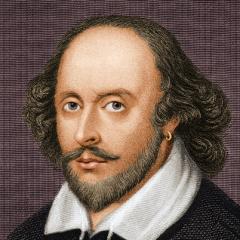
William Shakespeare
William Shakespeare

William Shakespeare (1564 - April 23, 1616) was one of the greatest poets of the English Renaissance, renowned for his dramatic works. His plays spanned a variety of genres, including tragedy, comedy, and history, and have had a profound impact on literature worldwide. more

You May Also Like

“In 1841 you and I had together a tedious low-water trip, on a Steam Boat from Louisville to St. Louis. You may remember, as I well do, that from Louisville to the mouth of the Ohio there were, on board, ten or a dozen slaves, shackled together with irons. That sight was a continual torment to me; and I see something like it every time I touch the Ohio, or any other slave-border.”

“I do but quote from one of those speeches when I declare that "I have no purpose, directly or indirectly, to interfere with the institution of slavery in the States where it exists. I believe I have no lawful right to do so, and I have no inclination to do so."”

“In the first place, I insist that our fathers did not make this nation half slave and half free, or part slave and part free. I insist that they found the institution of slavery existing here. They did not make it so, but they left it so because they knew of no way to get rid of it at that time.”

“I think slavery is wrong, morally, and politically. I desire that it should be no further spread in these United States, and I should not object if it should gradually terminate in the whole Union.”

“I do not wish to be misunderstood upon this subject of slavery in this country. I suppose it may long exist, and perhaps the best way for it to come to an end peaceably is for it to exist for a length of time. But I say that the spread and strengthening and perpetuation of it is an entirely different proposition. There we should in every way resist it as a wrong, treating it as a wrong, with the fixed idea that it must and will come to an end.”

“Now, I confess myself as belonging to that class in the country who contemplate slavery as a moral, social and political evil, having due regard for its actual existence amongst us and the difficulties of getting rid of it in any satisfactory way, and to all the constitutional obligations which have been thrown about it; but, nevertheless, desire a policy that looks to the prevention of it as a wrong, and looks hopefully to the time when as a wrong it may come to an end.”

“I think that one of the causes of these repeated failures is that our best and greatest men have greatly underestimated the size of this question (slavery). They have constantly brought forward small cures for great sores-plasters too small to cover the wound. That is one reason that all settlements have proved so temporary-so evanescent.”