“That dark laboratory we call the soil.”
Quote by Aldo Leopold
Work
Aldo Leopold: A Sand County Almanac & Other Writings on Conservation and Ecology: (Library of America #238)
Aldo Leopold's 'A Sand County Almanac' is a seminal work in the field of conservation and ecology, offering insights into the natural world and the human relationship with it. This collection also includes Leopold's other writings, providing a comprehensive view of his thoughts on environmental stewardship and the importance of preserving natural habitats. more
Author
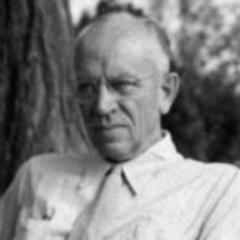
Aldo Leopold
Aldo Leopold was an American author, philosopher, conservationist, and environmentalist. He is best known for his book 'A Sand County Almanac', which is considered a foundational text in environmental ethics and wildlife management. Leopold was born on January 11, 1887, and passed away on April 21, 1948. more
You May Also Like
Source: Seeing Beyond Depression
“The logic is backwards. Genius is the result of doing what you love, not a prerequisite for it.”
Source: The Ascent of Humanity: Civilization and the Human Sense of Self
“Keep doing some kind of work, that the devil may always find you employed.”