Quotessence
Home / Quotes / Quote by Arthur Schopenhauer

Quote by Arthur Schopenhauer

“The real meaning of persona is a mask, such as actors were accustomed to wear on the ancient stage; and it is quite true that no one shows himself as he is, but wears his mask and plays his part. Indeed, the whole of our social arrangements may be likened to a perpetual comedy; and this is why a man who is worth anything finds society so insipid, while a blockhead is quite at home in it.”

Quote by Arthur Schopenhauer

Work

Studies in Pessimism: Top of Schopenhauer

This book delves into the philosophical concepts of Arthur Schopenhauer, focusing on his views on pessimism and its implications. more

Author
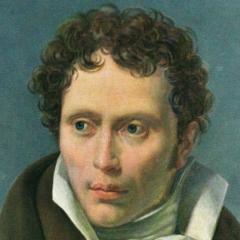
Arthur Schopenhauer
Arthur Schopenhauer

Arthur Schopenhauer was a prominent German philosopher born on February 22, 1788, and died on September 21, 1860. He is one of the most important figures in 19th-century German philosophy and is known for his unique pessimistic philosophical ideas. more

You May Also Like

“No one knows what capacities for doing and suffering he has in himself, until something comes to rouse them to activity: just as in a pond of still water, lying there like a mirror, there is no sign of the roar and thunder with which it can leap from the precipice, and yet remain what it is; or again, rise high in the air as a fountain. When water is as cold as ice, you can have no idea of the latent warmth contained in it.”

“Man may have the most excellent judgment in all other matters, and yet go wrong in those which concern himself; because here the will comes in and deranges the intellect at once. Therefore let a man take counsel of a friend. A doctor can cure everyone but himself; if he falls ill, he sends for a colleague.”

“Imagination is strong in a man when that particular function of the brain which enables him to observe is roused to activity without any necessary excitement of the sense. Accordingly, we find that imagination is active just in proportion as our sense are not excited by external objects. A long period of solitude, whether in prison or in a sick room; quiet, twilight, darkness-these are the things that promote its activity; and under their influence it comes into play of itself.”

“The scenes and events of long ago, and the persons who took part in them, wear a charming aspect to the eye of memory, which sees only the outlines and takes no note of disagreeable details. The present enjoys no such advantage, and so it always seems defective.”

“The little incidents and accidents of every day fill us with emotion, anxiety, annoyance, passion, as long as they are close to us, when they appear so big, so important, so serious; but as soon as they are borne down the restless stream of time they lose what significance they had; we think no more of them and soon forget them altogether. They were big only because they were near.”

“The ordinary method of education is to imprint ideas and opinions, in the strict sense of the word, prejudices, on the mind of the child, before it has had any but a very few particular observations. It is thus that he afterwards comes to view the world and gather experience through the medium of those ready-made ideas, rather than to let his ideas be formed for him out of his own experience of life, as they ought to be.”

“A man's knowledge may be said to be mature, in other words, when it has reached the most complete state of perfection to which he, as an individual, is capable of bringing it, when an exact correspondence is established between the whole of his abstract ideas and the things he has actually perceived for himself. His will mean that each of his abstract ideas rests, directly or indirectly, upon a basis of observation, which alone endows it with any real value; and also that he is able to place every observation he makes under the right abstract idea which belongs to it.”