Quotessence
Home / Quotes / Quote by Niccolo Machiavelli

Quote by Niccolo Machiavelli

Work

The Prince

The Prince is a seminal work in the field of political science, offering a pragmatic and often ruthless analysis of how to acquire and maintain political power. It explores the nature of leadership, the role of the state, and the use of political strategies to achieve and maintain power. Machiavelli's observations are based on his experience and study of the political landscape of his time, including the rise and fall of various Italian city-states. more
Author

Niccolo Machiavelli
Niccolo Machiavelli

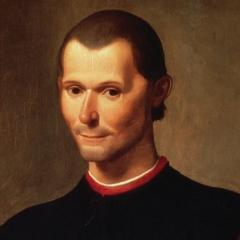
Niccolò Machiavelli was an Italian historian, political theorist, and philosopher who lived during the Renaissance. He is best known for his book 'The Prince,' which delves into the concepts of power, political tactics, and the art of rule. more

You May Also Like

“Ten thousand officers and men named Smith died in the First World War. One thousand four hundred Campbells died, six thousand Joneses, and one thousand Murphys. Smith, Campbell, Jones and Murphy: the names of the United Kingdom, whose presence in regiments from all four countries speaks of the ebb and flow of peoples within these islands, of a common sacrifice, and a shared agony that burned in so many million hearts down the decades.”

“To be attached to the subdivision, to love the little platoon we belong to in society, is the first principle (the germ as it were) of public affections. It is the first link in the series by which we proceed toward a love to our country and to mankind. The interest of that portion of social arrangement is a trust in the hands of all those who compose it; and as none but bad men would justify it in abuse, none but traitors would barter it away for their own personal advantage.”

“D-Day represents the greatest achievement of the american people and system in the 20th century. It was the pivot point of the 20th century. It was the day on which the decision was made as to who was going to rule in this world in the second half of the 20th century. Is it going to be Nazism, is it going to be communism, or are the democracies going to prevail?”

“In the nineteenth and twentieth centuries you have these great nation states hurling their young men at one another. The victory was really going to rest on who could do the best job of bringing up their kids to become efficient and effective soldiers. That's pretty grandiose, I guess, but I do think that, and thank God it's been the armies of democracy that have emerged from this as the triumphant armies.”