“Unlike the pattern which seems to prevail in the rest of life, in the human species the weak not only survive but often triumph over the strong. The self-hatred inherent in the weak unlocks energies far more formidable then those mobilized by an ordinary struggle for existence.”
Quote by Eric Hoffer
Work
Between the Devil and the Dragon: The Best Essays and Aphorisms of Eric Hoffer
This book compiles a selection of Eric Hoffer's most insightful essays and aphorisms, offering readers a glimpse into his profound thoughts on human nature, society, and the complexities of the world. more
Author
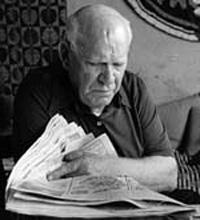
Eric Hoffer
Eric Hoffer was an American philosopher known for his profound insights into human nature. His works often explore society, politics, and human behavior, particularly focusing on the experiences of the underclass. Hoffer came from a German immigrant family and worked in various jobs in California during his youth, including dockworker, cook, and gardener. His first book, 'The Ordeal of Change', was published in 1950 and quickly became a bestseller, gaining him widespread recognition. His other works include 'The Ordeal of Change' and 'The True Believer' among others. more
You May Also Like
Source: The Ordeal of Change
“It needs some intelligence to be truly selfish. The unintelligent can only be self-righteous.”
Source: The Passionate State of Mind
“Those of little faith are of little hatred.”
Source: The Passionate State of Mind
“It needs fanatical faith to rationalize our cowardice.”
Source: THE TRUE BELIEVER
Source: Between the Devil and the Dragon: The Best Essays and Aphorisms of Eric Hoffer
“The earth is like a spaceship that didn't come with an operating manual.”
Source: Between the Devil and the Dragon: The Best Essays and Aphorisms of Eric Hoffer
Source: Between the Devil and the Dragon: The Best Essays and Aphorisms of Eric Hoffer
Source: Between the Devil and the Dragon: The Best Essays and Aphorisms of Eric Hoffer