Quotessence
Home / Quotes / Quote by Jared Taylor

Quote by Jared Taylor

“Whites may be surprised by the strength of black voter solidarity. Chris Bell, a white Democratic congressman from Texas, was redistricted into a largely black area and promptly crushed in the 2004 Democratic primary by the former head of the Houston chapter of the NAACP. He felt betrayed: He said he had spent his entire career “fighting for diversity, championing diversity,” and was dismayed that “many people do not want to look past the color of your skin.” This only demonstrated how little Mr. Bell understood blacks. As Bishop Paul Morton of the St. Stephen Full Gospel Baptist Church in New Orleans said of black voters, “I’ve talked to some people who say, ‘I don’t care how bad the black is, he’s better than any white.’” Many blacks also expect all blacks to vote the same way. Jesse Jackson criticized Alabama congressman Artur Davis for voting against Mr. Obama’s signature medical insurance legislation, saying, “You can’t vote against healthcare and call yourself a black man.” Racial consciousness explains why President Barack Obama drew support even from blacks who ordinarily vote Republican. No fewer than 87 percent of blacks who identified themselves as conservatives said they would vote for him. In the three states that track party registration by race—Florida, Louisiana, and North Carolina—blacks were dropping off the Republican rolls in record numbers and rallying to the Democrats. As one GOP black explained during the primaries, “Most black Republicans who support John McCain won’t tell you this, but if Barack Obama is the nominee for the Democratic ticket, they will go into the voting booth in November and vote for Obama.” “Among black conservatives, they tell me privately, it would be very hard to vote against him [Obama] in November,” said black conservative radio host Armstrong Williams. During the campaign, former San Francisco mayor Willie Brown said, “I think most white politicians do not understand that the race pride we [blacks] all have trumps everything else.”

Quote by Jared Taylor

Work

White Identity: Racial Consciousness in the 21st Century

Browse quotes and source details for this work. more

Author
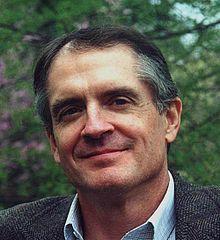
Jared Taylor
Jared Taylor

Jared Taylor, born on September 15, 1951, is an American journalist known for his views on racism and immigration issues. He was the editor of 'American Renaissance' magazine and has contributed articles to various publications, including 'The American Conservative' and 'The New American'. more

You May Also Like

“The Nation of Islam is the best known Black Muslim group, though its actual numbers may be no more than 100,000. However, many blacks who are not, themselves, Muslims have great respect for the group’s leader, Louis Farrakhan. Users of the Internet arm of Black Entertainment Television, BET.com, chose him as the black “person of the year” for 2005. Mr. Farrakhan was elected over Oprah Winfrey, then-Senator Barack Obama, Robert L. Johnson, who started BET, and the victims of Hurricane Katrina. “An overwhelming percentage of our users agreed that Minister Farrakhan made the most positive impact on the Black community over the past year,” explained a BET spokesman. What did Mr. Farrakhan do to deserve that honor? He received heavy news coverage twice that year. Once was when he promoted the theory that whites blew up the New Orleans levees to destroy black neighborhoods. The other was when he organized a “Millions More Movement” on the National Mall to celebrate the tenth anniversary of the Million Man March. On that occasion, Michael Muhammad, National Youth Minister for the Nation of Islam declaimed: “We want to say to our young brothers of the Crips and the Bloods that we are one family. The real enemy doesn’t wear blue, but white, even when he’s butt naked.” Ayinde Baptiste of the Nation of Islam added: “We are at war here in America. . . . We need soldiers now. We need black male soldiers, we need black feminist soldiers, we need Crips and Bloods soldiers . . . soldiers in the prisons, soldiers in the streets.” The Congressional Black Caucus endorsed the event, and five black congressmen attended it.”

“Blacks in upscale Shaker Heights are convinced they are victims. They are professionals who moved to the Cleveland suburb because of its good schools, but found that black children had an average grade point average of 1.9 compared to a white average of 3.45. John Ogbu, a Nigerian immigrant who is an expert at UC Berkeley on race differences in school performance, moved to Shaker Heights for nine months and researched the schools. He concluded that most of the problem was that black students were not interested in studying—they considered it “acting white”—and that their parents did not push them. Blacks were outraged. One parent called him “an academic Clarence Thomas,” and the National Urban League said his conclusions were an effort to “blame the victims of racism.” One reporter could not find a single black person in Shaker Heights who had anything good to say about Prof. Ogbu’s conclusions. For blacks, there was only one explanation for black failure: white racism.”

“[C]an readers think of instances in which blacks publicly urged other blacks to set aside racial concerns, to consider themselves Americans first, and to work for the good of all? When have black authority figures expressed regret for even the most horrific anti-white crimes? When have blacks praised diversity if it meant giving up black majorities? How many wealthy blacks make charitable donations to broadly American rather than explicitly black institutions? When has a black person publicly chided other blacks for excessive concern with narrowly black issues? Blacks differ from whites both in what they say and do and what they do not say or do. We find among many blacks—perhaps the majority—a view of race sharply at odds with what the civil rights movement was presumably working for: the elimination of race as a relevant category in American life. White racism is commonly alleged to be the great obstacle to harmonious race relations in the United States, but whites are the only group that actually subscribes to the goal of eliminating race consciousness and that actively polices its members for signs of such consciousness. If whites were the great obstacle to harmony, it would be they who unapologetically put their interests first, who fantasized about killing blacks, who were careful to show they were “white enough,” and ostracized those who were not. Instead, any white person who spoke or acted in ways blacks take for granted would be hounded out of public life and scorned in private.”

“Between 2000 and 2005, the Hispanic population increased at an annual rate of 3.7 percent, no less than 14 times the growth rate for whites, and more than three times the black rate. This increase was due both to high birthrates and to immigration of about 800,000 Hispanics every year. Much of that immigration was illegal. The Pew Hispanic Center estimated in 2009 that 12.7 million Mexican citizens were living in the United States in 2008, and that they accounted for 60 percent of the 11.9 million or so illegal immigrants in the country. The center has estimated that other Hispanics account for another 20 percent of illegal immigrants. Most Americans believe that a willingness to learn English is a prerequisite to full participation in American life, but this does not appear to be a high priority for many Hispanics. According to a 2006 poll conducted by Investor’s Business Daily, 81 percent of Hispanics spoke mostly or only Spanish at home. Even Hispanics who are comfortable in English prefer Spanish; according to a poll by P.C. Koch, nearly 90 percent of bilingual Hispanics get their news exclusively from Spanish-language sources. In 2003, 44 percent of Hispanics did not speak and read English well enough to perform routine tasks, up from 35 percent in 1992. English illiteracy therefore increased for Hispanics during the decade, whereas it declined for every other major population group.”

“The Mexican American Legal Defense and Educational Fund (MALDEF), set up in 1968 by breakaway LULAC members, was modeled on the NAACP Legal Defense Fund. It has filed lawsuits in support of social benefits for illegal aliens and affirmative action for Hispanics, and against border control. One of its first executives was Mario Obledo, who also served as California secretary of health and welfare. In an interview on radio station KIEV in Los Angeles on June 17, 1998, he warned listeners: “We’re going to take over all the political institutions of California. California is going to be a Hispanic state and anyone who doesn’t like it should leave. If they [whites] don’t like Mexicans, they ought to go back to Europe.” That same year, President Bill Clinton awarded Mr. Obledo the Medal of Freedom.”

“In 2010, the state of Arizona passed a law that made illegal immigration a state offence, but the prospect of even one American state taking illegal immigration seriously was anathema to Hispanic groups. The National Council of La Raza said the Arizona law reflected “the rhetoric of hate groups, nativists, and vigilantes.” MALDEF (the Mexican American Legal Defense and Education Fund) said the law “launches Arizona into a spiral of pervasive fear.” The president of LULAC (League of United Latin American Citizens), Rosa Rosales, called it a “racist law,” and an official with the Congressional Hispanic Caucus said it would “open the door to discrimination and racial profiling.” One of Arizona’s congressmen, Democrat Raul Grijalva, called for a boycott of his own state. The law, of course, said nothing about race; it merely paralleled largely unenforced provisions of federal immigration law. The people of Arizona were tired of playing host to an estimated half million illegal immigrants no matter where they came from. Hispanic groups were furious because they feared fellow Hispanics might be deported. We can assume they would have had no objections to the law if most illegal immigrants were Irishmen or Poles. There was irony but nothing unusual when Hispanics, who were acting out of pure racial solidarity, accused Arizonans, who were trying to enforce federal law, of racism.”

“If some Mexican-Americans have their way, they will not have to go back to Mexico for burial; Mexico will come to them. What is called the Reconquista movement aims to break the Southwest off from the United States and reattach it to Mexico or establish it as an independent, all-Hispanic nation, thus reversing the territorial consequences of the Mexican-American war. Reconquista is widely promoted on college campuses. Charles Truxillo, a professor of Chicano studies at the University of New Mexico, thinks “Republica del Norte” would be a good name for a new Hispanic nation, which would contain all of California, Arizona, New Mexico, and Texas and the southern part of Colorado. The Albuquerque-born Prof. Truxillo says the new nation is “an inevitability,” and should be created “by any means necessary.” He doubts violence will be necessary, however, because shifting demographics will make the transition seem natural.”

“Vicente Fox, who succeeded Mr. Zedillo and was president of Mexico from 2000 to 2006, institutionalized the policy of ensuring that Mexican-Americans remained Mexican. In 2002, his government established the Instituto de los Mexicanos en el Exterior (Institute for Mexicans Abroad) to promote “a more comprehensive approach” to promoting Mexican loyalty. One method was to invite Mexican-American elected officials to Mexico, to deepen their Mexican identity. In October 2003, for example, the Instituto invited 30 American state legislators and mayors for two days in Mexico City, where they met lawmakers, ministry officials, scholars, and advocates for immigrants. The Instituto had plans to bring 400 Mexican-American officials on similar trips every year. The Instituto also sends representatives to the United States. Jacob Prado, counselor for Latino affairs at the Mexican Embassy, explained to the National Association of Latino Elected and Appointed Officials that it was in “Latino officials like yourselves that thousands of immigrants from Mexico find a political voice.” He went on to explain: “Mexico will be better able to achieve its full potential by calling on all members of the Mexican Nation, including those who live abroad, to contribute with their talents, skills and resources.” American citizens who hold elective office in the United States are still expected to be “members of the Mexican Nation.” One Instituto official is Juan Hernandez. Born in the United States, and therefore a US citizen, Mr. Hernandez was at one time a professor at the University of Texas at Dallas, but made no secret of his real loyalties. In 2002 he wrote that he had “been commissioned to bring a strong and clear message from the president to Mexicans abroad: Mexico is one nation of 123 million citizens—100 million who live in Mexico and 23 million who live in the United States.” On ABC’s Nightline on June 7, 2001, he explained, “I want the third generation, the seventh generation, I want them all to think ‘Mexico first.’ ” Adolfo Aguilar Zinser, who later became national security advisor to Vicente Fox, wrote in the Mexican newspaper El Siglo de Torreon that the Mexican government should work with the “20 million Mexicans” in the United States to advance Mexican “national interests.” Vicente Fox’s interior secretary Santiago Creel once complained, “It’s absurd that (the United States) is spending as much as it’s spending to stop immigration flows that can’t be stopped . . . .” When he took over in 2004 as the man in charge of border relations with the United States, Arturo Gonzalez Cruz explained that his ultimate goal was to see the border disappear entirely. Mr. Fox himself insisted that any measure the United States took to arrest or deport illegal immigrants was a violation of human rights.”

“Consulates monitor American welfare programs and make sure Mexicans make the most of them. Some programs are closed to illegal immigrants but food stamps (the program is known since 2008 as Supplemental Nutrition Assistance Program or SNAP) are not. Many illegal immigrants hesitate to apply for them for fear their status will be discovered and they will be deported. Mexican Consul Luis Miguel Ortiz Haro of Santa Ana in Orange County, California, went on Spanish-language television to tell Mexicans it was safe to apply. “It won’t affect your immigration status,” he explained. More than 1,200 people applied for food stamps the next day. Consulates also have a program called Ventanillas de Salud (Health Windows), which publicizes American hospitals and clinics that treat illegal immigrants for free. In 2007, the consul in Los Angeles proudly noted that 300,000 Mexicans in the area had benefited from the consulate’s medical advice. Cost to taxpayers for medical treatment for illegal immigrants in Los Angeles Country runs to about $400 million a year. In 2005, as it does every year, the consulate in Los Angeles gave the school district nearly 100,000 textbooks. The history books are the ones used in Mexico. They refer to the American flag as “the enemy flag” and say “we love our country because it is ours.” In Salinas, California, the consul general for the area organized a “Mexican Flag Day” to promote Mexican patriotism at an American public school.”

“Asians are still a small minority—14.5 million (including about one million identified as part Asian) or 4.7 percent of the population—but their impact is vastly disproportionate to their numbers. Forty-four percent of Asian-American adults have a college degree or higher, as opposed to 24 percent of the general population. Asian men have median earnings 10 percent higher than non Asian men, and that of Asian women is 15 percent higher than non-Asian women. Forty-five percent of Asians are employed in professional or management jobs as opposed to 34 percent for the country as a whole, and the figure is no less than 60 percent for Asian Indians. The Information Technology Association of America estimates that in the high-tech workforce Asians are represented at three times their proportion of the population. Asians are more likely than the American average to own homes rather than be renters. These successes are especially remarkable because no fewer than 69 percent of Asians are foreign-born, and immigrant groups have traditionally taken several generations to reach their full economic potential. Asians are vastly overrepresented at the best American universities. Although less than 5 percent of the population they account for the following percentages of the students at these universities: Harvard: 17 percent, Yale: 13 percent, Princeton: 12 percent, Columbia: 14 percent, Stanford: 25 percent. In California, the state with the largest number of Asians, they made up 14 percent of the 2005 high school graduating class but 42 percent of the freshmen on the campuses of the University of California system. At Berkeley, the most selective of all the campuses, the 2005 freshman class was an astonishing 48 percent Asian. Asians are also the least likely of any racial or ethnic group to commit crimes. In every category, whether violent crime, white-collar crime, alcohol, or sex offenses, they are arrested at about one-quarter to one-third the rate of whites, who are the next most law-abiding group. It would be a mistake, however, to paint all Asians with the same brush, as different nationalities can have distinctive profiles. For example, 40 percent of the manicurists in the United States are of Vietnamese origin and half the motel rooms in the country are owned by Asian Indians. Chinese (24 percent of all Asians) and Indians (16 percent), are extremely successful, as are Japanese and Koreans. Filipinos (18 percent) are somewhat less so, while the Hmong face considerable difficulties. Hmong earn 30 percent less than the national average, and 60 percent drop out of high school. In the Seattle public schools, 80 percent of Japanese-American students passed Washington state’s standardized math test for 10th-graders—the highest pass rate for any ethnic group. The group with the lowest pass rate—14 percent—was another “Asian/Pacific Islanders” category: Samoans. On the whole, Asians have a well-deserved reputation for high achievement.”