Quotessence
Home / Quotes / Quote by Trevor Noah

Quote by Trevor Noah

Work

Into the Uncut Grass

Browse quotes and source details for this work. more
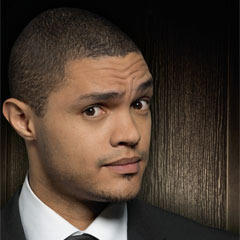
Author

Trevor Noah
Trevor Noah

Trevor Noah is a South African-born comedian, writer, and television host. He is known for his unique sense of humor and insightful commentary on social issues. Born on February 20, 1984, Noah grew up in Johannesburg, South Africa. He began his career performing in comedy clubs in Johannesburg and has since gained recognition in the television and radio industry. more

You May Also Like

“The role of fear is especially relevant in neuroplastic healing. If the brain comes to believe that something harmless is dangerous, that belief causes fear that can create or contribute to pain and illness. The healing insight of neuroplasticity is that this association can be reversed: the false sense of danger that causes the fear— and the baseless fear that causes the pain— can be unlearned, and the pain can ease and the body can heal.”

“When we’re in the process of breakdown, there are actually three related things that are breaking down: (1) Our self-image is breaking down— as the evidence mounts that we’re not everything we say we are; (2) our body is breaking down— rom the strain of defending and promoting the self-image; and (3) the self-image strategy for happiness is breaking down— the strategy that says the best way to be happy is to try to become who we want to be in the world. … Breaking down happens to all of us. Whether we’re losing the battle to fulfill our self- image or exhausting ourselves in trying to win it, we all break down. But we don’t always break through. This book is about flipping breakdowns into breakthroughs by surrendering the self- image that once was moving us forward, but now is holding us back.”

“Unlike with past depressions, though, my way out wasn’t to protect my story by going home. I couldn’t go home. So this time I didn’t change my environment to support my story. I changed my story. That is what self-directed neuroplasticity makes possible. We don’t have to fulfill the story, prove the story, insist on the story, or be a servant of the story: we can edit the story— and not just by adding new thoughts to outshout the old thoughts but by editing, even deleting, the old thoughts that tell us “This is who I am. This is what I need to have. This is how things have to be.” No matter who we are or what stage of life we’re in, reality will at some point cause depression in us, making us suffer by defeating our self-image. The pain will get our attention and force us to act. If the pain is great enough, we might see the role of our story in our suffering and start to break through. If we don’t see the role of our story, we will think the action is all external, and we will try to make a change in our surroundings, or blame someone for the defeat of our self-image, or double down on our false stories, which will only make the pain grow.”

“Dissolving the self-image means surrendering our secrets— and this means secret-keeping can give us a tool for assessing a spiritual practice and asking the question, What works? The answer, to be helpful, should come not in the form of a single technique or approach but in the insights and principles that underlie numerous approaches. A successful practice will help us lose the secrets, including the secrets we keep from ourselves. Some people don’t feel comfortable talking about the unconscious. But whether we use the words unconscious or nonconscious, or subconscious, or semiconscious— whether we talk about repressing our feelings, or suppressing them, or shoving them down, or holding them in— it doesn’t really matter. In any language, in any approach, bringing out the things we’re hiding is healing.”

“What do you think of Chin Peng?” Hagar asked him, pointing to the TV screen with the remote control. “Chin Peng? What about him?” “He wants to come home but he’s not allowed to.” “The war is over. We signed the Hat Yai Treaty.” “Does that mean he can come home?” “Why shouldn’t he? It’s been 27 years.” “Is that your opinion as a veteran? You were a soldier. You fought against the Communists.” Our father stopped to look at Hagar, his face serious. “The war is over,” he stressed. “We stood down.”