Quotessence
Home / Quotes / Quote by Akhil Sharma

Quote by Akhil Sharma

“I tend to think that we are all pretty much alike. We all feel despair. We all have problems with relationships. We all become afraid. We all look at others and think these other people are more fortunate than us. Certainly the details of our life are unique. Spending time thinking of how I am different from someone else, however, does not tend to be very productive.”

Quote by Akhil Sharma

Author
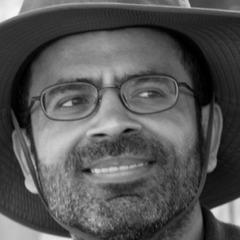
Akhil Sharma
Akhil Sharma

Akhil Sharma is an Indian-American author born on July 22, 1971. His works are known for their humor and depth, exploring themes of identity, family, and social issues. more

You May Also Like

“Every time I traveled to a new city, I would learn about local heroes I did not know about, and I would learn about their very impressive contribution to their cities. There are nuanced senses that only people from the region can understand, and no amount of globalization can change that. It's almost like a maxim of a sorts, when you think about language, the way that people speak in a location. It does happen with architects, in terms of how they engage cities.”

“Communication requires cultural context, and technology facilitates our ability to cross-reference ideas over time. Charles Moore were saying: Enough with the sterile, context-less architecture. Enough with the functional-minded frame of operation. How about a little mess? How about a little, let's say, syntax? A little quotation using history? How about some other meanings or symbols? I think that's the only logical reaction when you have to thoughtfully manage the communication of a lot of information.”

“I'm thinking about the idea of poetic license. People say that about certain writers: "Oh, the grammar sucks, but it's just the poetic license." We accept it as being an art form of sorts: the incorrect rearrangement of meaningful things. Unlike sciences, literature as art relies on societal acceptance of a certain vocabulary. We're just making sounds out of our mouths if we don't both accept that what I'm saying has very significant meanings, and I'm accurately targeting what vocabulary I use and how I arrange each word.”

“In 500 years, English has changed a lot, and right now we're undergoing an extremely rapid rate of accelerated advancement in terms of technology, but I still have a hard time believing that we're going to stop speaking to each other. The role of architecture, in terms of communication, is not going to drastically change either. It's going to continue to create a cultural affect where people will be able to understand something beyond function that may otherwise be foreign to them.”

“I don't really know what's going to happen 10,000 years from now. We've been biologically modern for, what, almost 200,000 years? Let's go back to the cave paintings: I think the moment that someone landed a charcoal on a wall to describe reality, that's language already - that happened on a vertical surface, which, even though they didn't build it, somehow we could understand it as architecture because there's a cavity that separates the inside and outside. That's 40,000 years in the past.”

“I recently wrote a piece on comics in architecture - I was talking about the three kinds of comics I pay attention to: the Franco-Belgian, the Japanese manga, and the American comics. I started thinking about the relationship between Japanese manga and Japanese architecture, or Franco-Belgian bande dessinée versus Franco-Belgian architecture, it began to make sense; there are parallels to the modes of operations and the cultures they belong to. If I didn't force myself to write, I would have no forum to clarify these thoughts. Writing is really helpful.”

“I think architecture could be understood as the construction of realities, or the construction of worlds. One of the reasons why architects are often attracted to philosophers, partially, has to do with making sense of the world around us as well as the making of worlds, and in our case, the realities we create can be as real as concrete. These kinds of ideas, of wild imagination, go into the question of how you make a world.”

“When I stopped touring, it was like trying to stop a bullet train or a giant lead ball falling from a 100 stories up - it's momentum and it doesn't just stop. I drew a line in the calendar and made it a brick wall and just stopped dead. There was no other way. It would've taken another 100 years to slow down slowly. I had to let myself imagine a calendar with no lines; when every single day is being predetermined six months in advance, there's no more fluidity to time.”